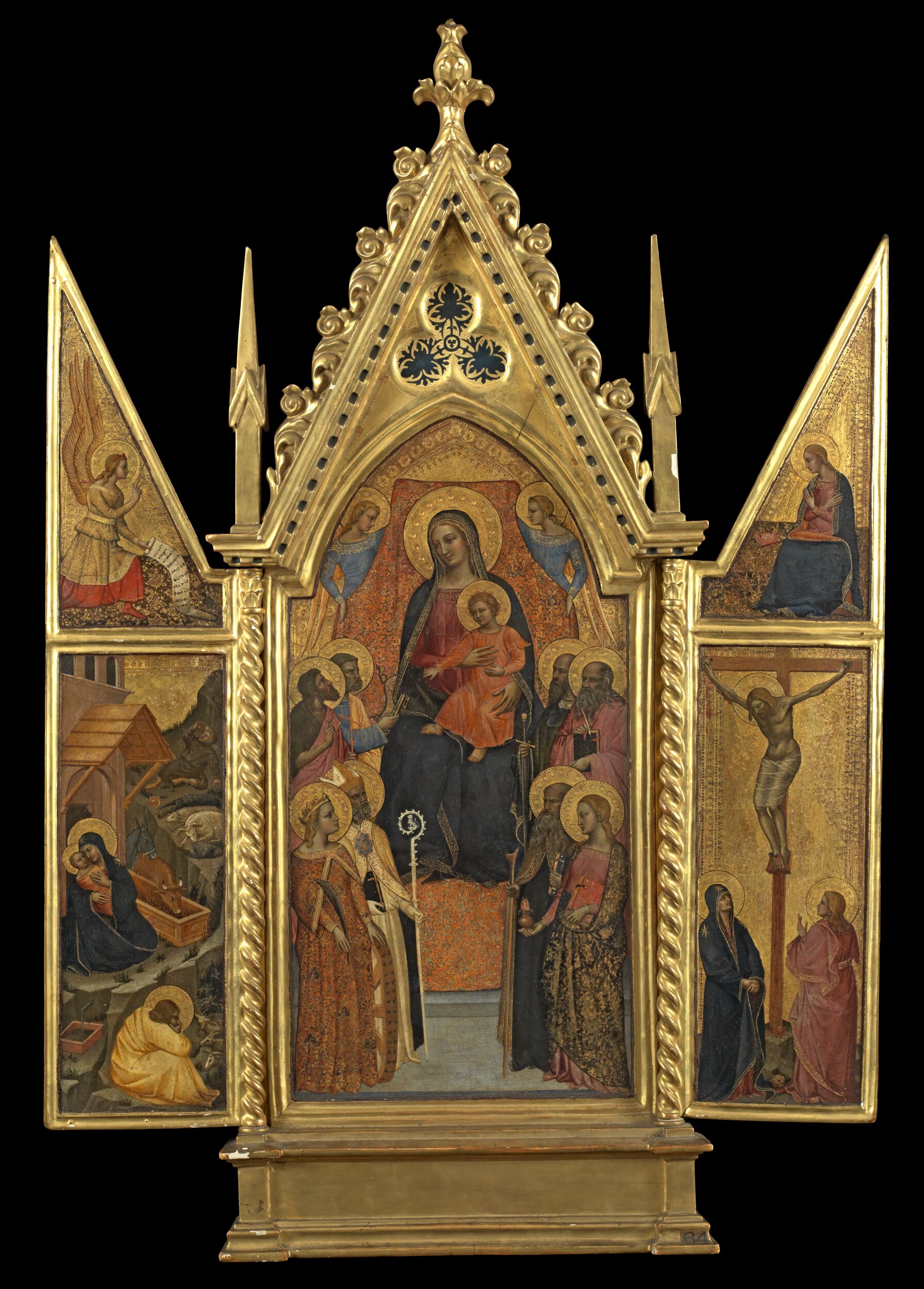
Crucifixion with Virgin of the Annunciation - above (right panel)

- Artist: Italy (Florence) mid-14th century
- Date: (circa) 1330 - 1370
- Medium: tempera on panel
- Museum: The Courtauld Gallery
- Collection record: The Courtauld Gallery website
Listen to the free audio guide
About this artwork
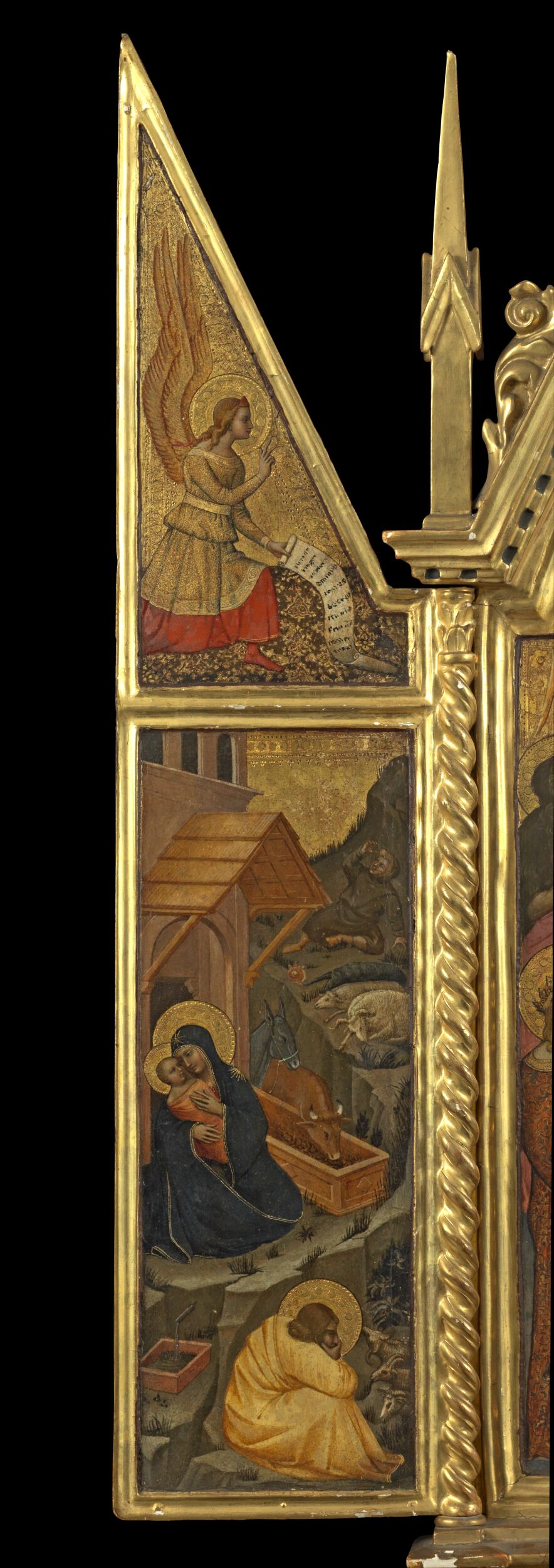
This is the “Crucifixion with Virgin of the Annunciation – above (right panel)”, painted in Florence in the mid‑14th century. The work dates from roughly 1330 to 1370 and is executed in tempera on panel, a medium that gives the colors a luminous, almost glass‑like quality.
You’ll notice the Christ figure is central, his body rendered with a careful, almost geometrical precision typical of early Florentine painters. He’s surrounded by a band of mourners—Mary, the Virgin, and other saints—whose faces carry the subtle emotional depth that was beginning to replace the more stylized Gothic expressions of earlier decades. The Virgin herself, standing above the crucifix, is portrayed in a quiet, contemplative pose, a foreshadowing of the Annunciation scene that appears in the lower panels of the same polyptych.
The palette is restrained: earth tones, deep reds, and a touch of ochre, all balanced by the occasional gold leaf that hints at divine light. The panel’s surface shows fine brushwork, revealing how the artist layered tempera to achieve depth without losing the flatness that defines the period’s aesthetic. This piece exemplifies the transition toward the naturalism that would later define the Renaissance, making it a fascinating snapshot of Florentine art history.
See it in person
Crucifixion with Virgin of the Annunciation - above (right panel) hangs in The Courtauld Gallery at Somerset House, London. Point your phone at any artwork there and audioguide.london plays a free audio guide in six languages — no app download needed.