Christ in the House of Martha and Mary
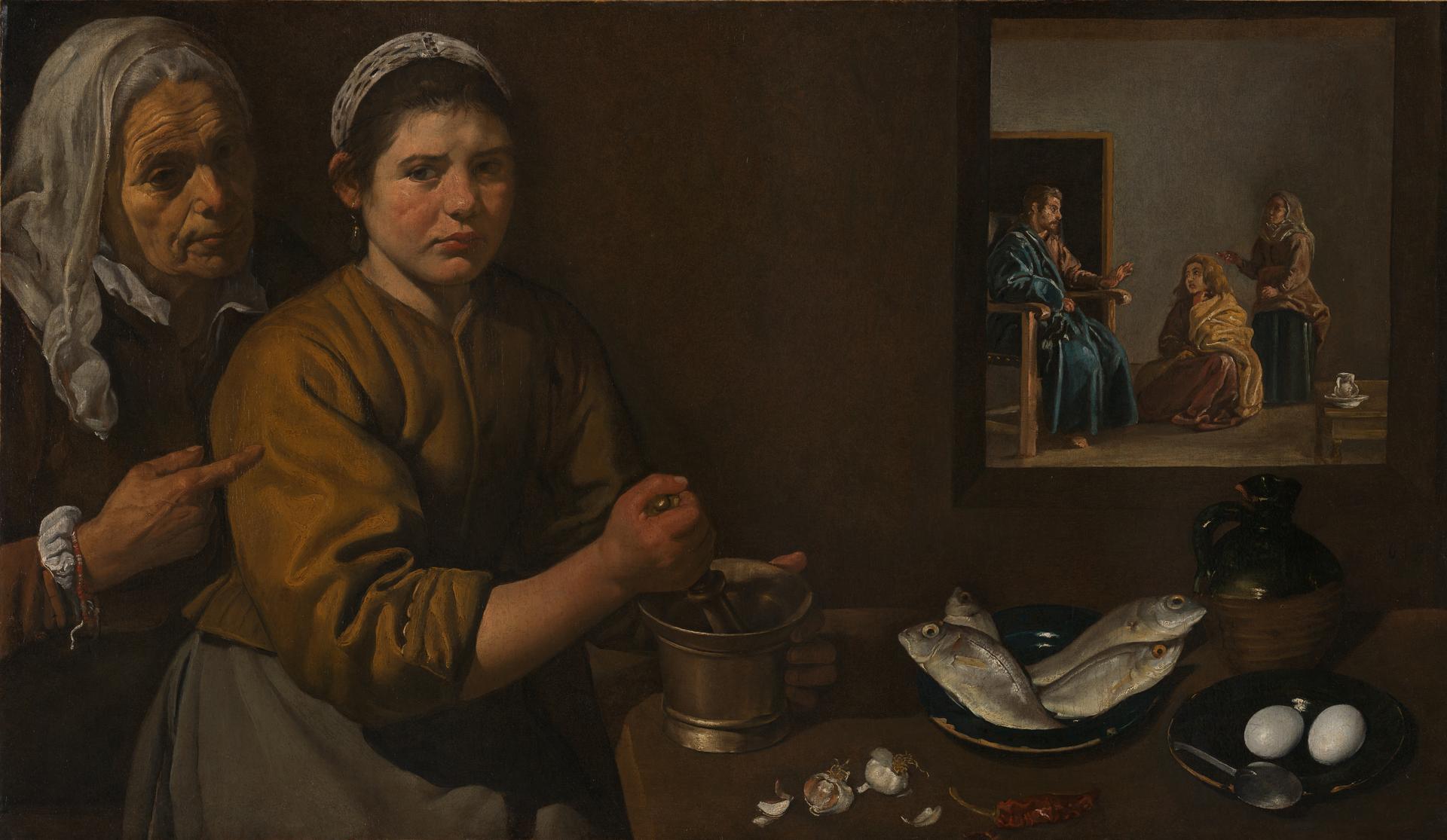
- Artist: Diego Velázquez
- Date: probably 1618
- Medium: oil on canvas
- Museum: The National Gallery
- Collection record: The National Gallery website
Listen to the free audio guide
About this artwork
This is the Christ in the House of Martha and Mary by Diego Velázquez. Painted in the early 17th century, this work combines a everyday kitchen scene with a biblical story from the New Testament.
In the foreground, we see an elderly woman pointing towards a young girl who's working hard, possibly indicating that she should pay attention to the figures in the background. The older woman might be giving instructions or reprimanding the girl for not doing her job properly.
The scene behind them is taken directly from Luke 10: 38-42, where Mary sits at Jesus' feet listening to him, and her sister Martha complains that she's left to serve food alone. Christ replies, 'Mary has taken that good part, which shall not be taken away from her'. The contrast between the two sisters - one focused on action and the other on contemplation - is an important theme in this painting.
We view this biblical scene through an opening, but it's also been interpreted as a reflection in a mirror or a picture hung on the wall. Velázquez may have combined these two scenes to encourage us to think about their connection. The exact relationship between the everyday and the religious is left open to interpretation.
See it in person
Christ in the House of Martha and Mary hangs in The National Gallery on Trafalgar Square, London — free to enter. Point your phone at any artwork there and audioguide.london plays a free audio guide in six languages — no app download needed.