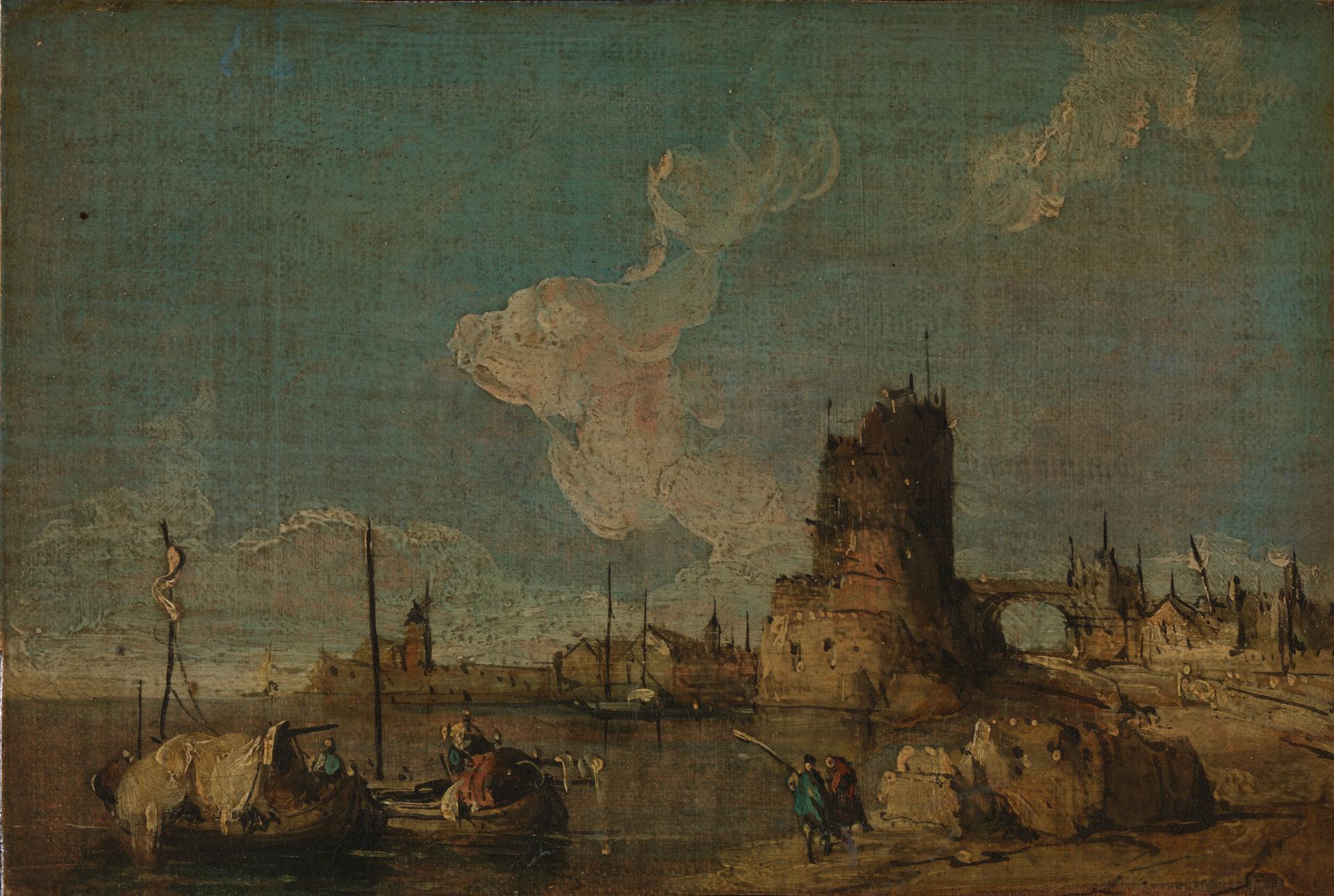
Caprice View with Ruins
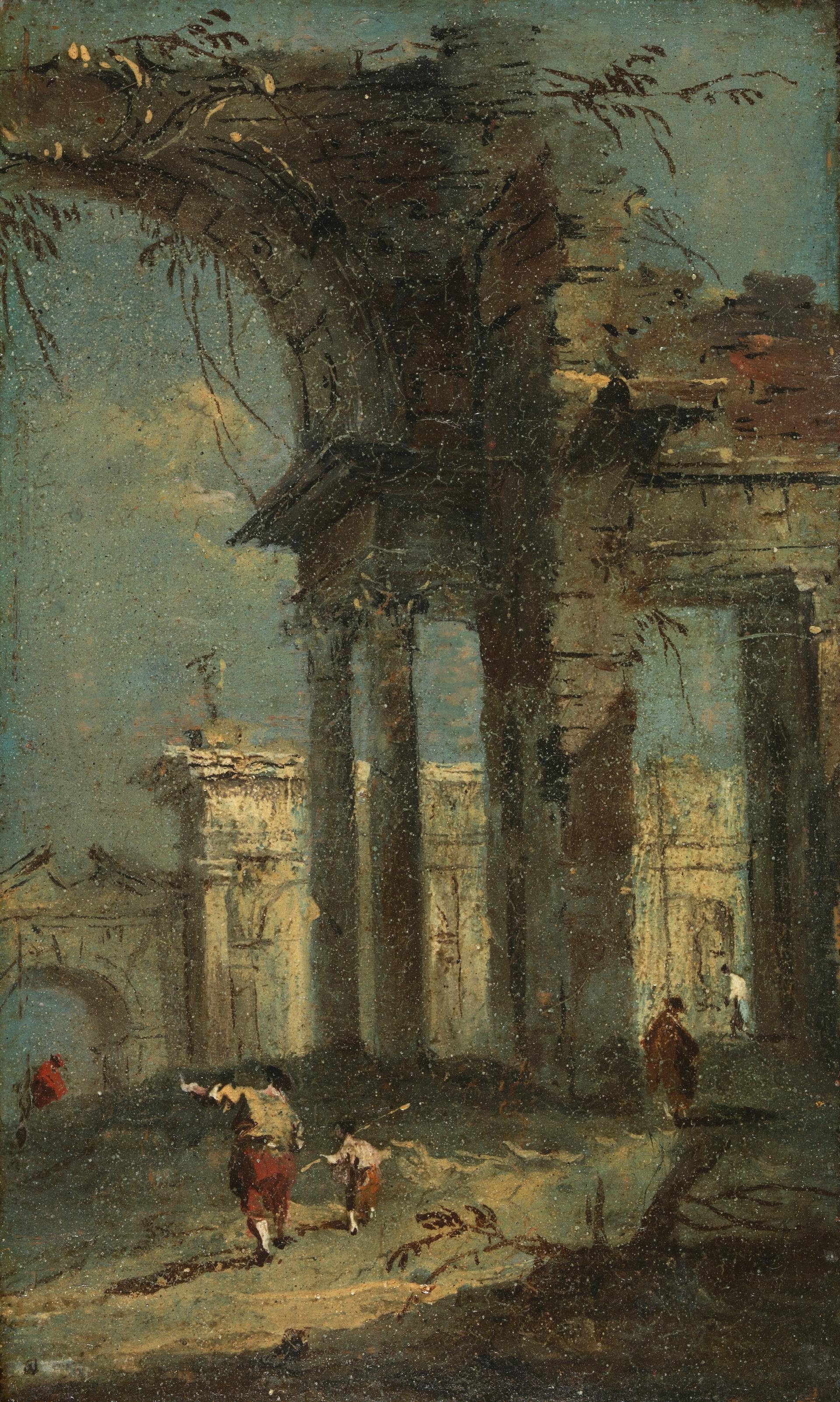
- Artist: Francesco Guardi
- Date: after 1780
- Medium: oil on wood
- Museum: The National Gallery
- Collection record: The National Gallery website
Listen to the free audio guide
In the museum now? Point your phone at the next artwork and hear its guide.
About this artwork
This is the "Caprice View with Ruins" painted in the Italian north. It's a beautiful example of how an artist can create depth and interest using contrast between light and shade.
Notice how the white stone building beyond the archway seems to leap out at you, while the rest of the scene is shrouded in shadow? This is done through the use of simple blocks of colour and black lines that suggest architectural details. At first glance, it might seem like this was painted quickly on the spot, but most likely it was created in Guardi's studio.
This painting is one of a group of three very small pictures, all of which have been framed together since the early 19th century. They're called capricci, imaginary scenes inspired by the Italian countryside and ancient buildings. Capricci were popular souvenirs for visitors to Venice, where Guardi lived and worked.
The "Caprice View with Ruins" is painted in oil on wood, a medium that was commonly used during this period. It's dated to after 1780, giving us an idea of the time frame in which it was created. Overall, this painting showcases Guardi's skill at capturing the essence of his surroundings and transporting them onto canvas.
See it in person
Caprice View with Ruins hangs in The National Gallery on Trafalgar Square, London — free to enter. Point your phone at any artwork there and audioguide.london plays a free audio guide in six languages — no app download needed.