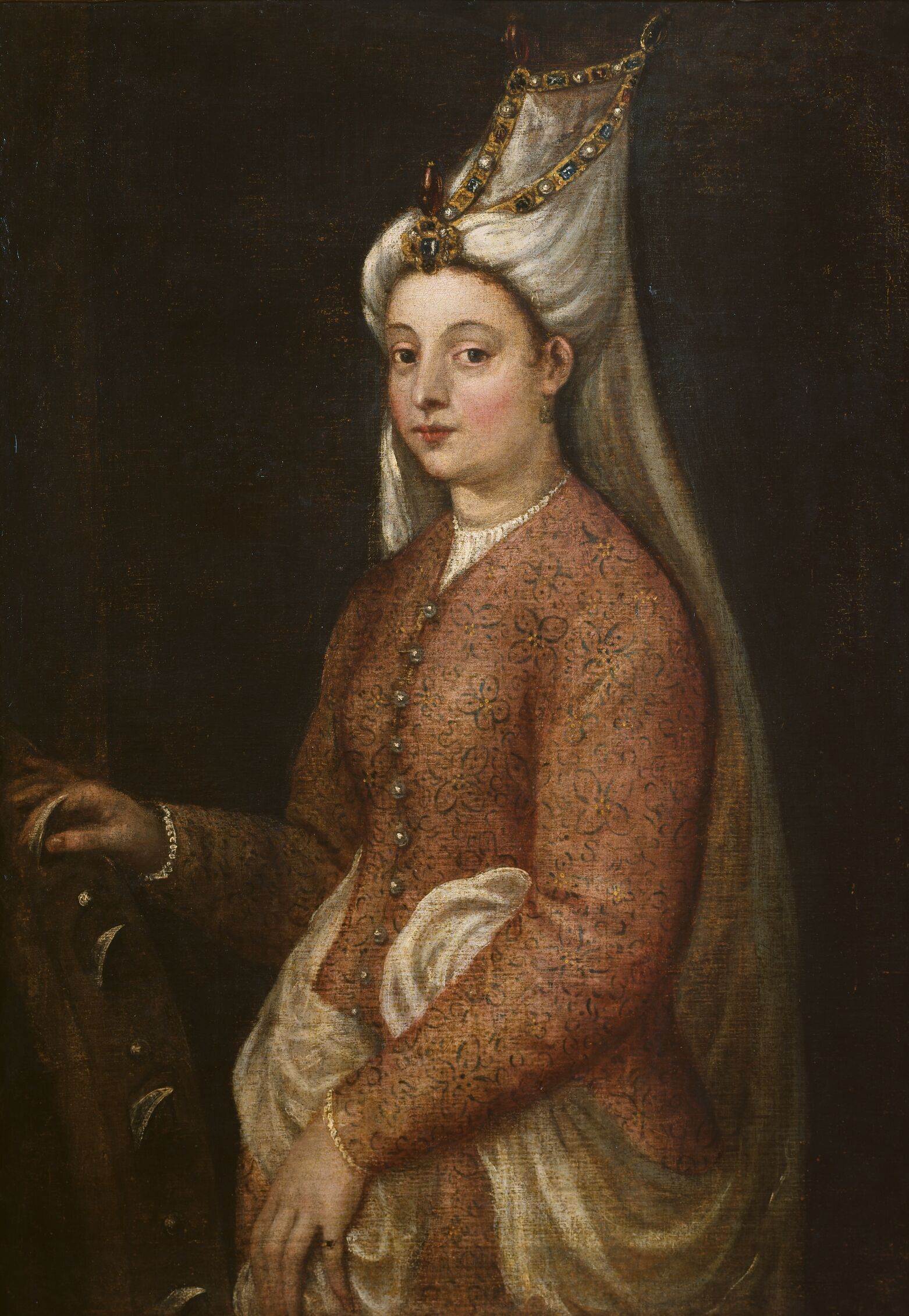
Cameria, daughter of Suleiman the Magnificent, as Saint Catherine
- Artist: Titian
- Date: (circa) 1560
- Medium: oil on canvas
- Museum: The Courtauld Gallery
- Collection record: The Courtauld Gallery website
Listen to the free audio guide
About this artwork
This is "Cameria, daughter of Suleiman the Magnificent, as Saint Catherine" by Titian. It dates to around 1560, oil on canvas, a curious blend of Renaissance technique and Ottoman subject. According to Giorgio Vasari, the Venetian master was commissioned to paint portraits of the sultan’s favorite wife and her daughter. Here, the young woman is dressed in a sumptuous robe, her dark hair pulled back, but the artist’s twist is the spiked wheel of Saint Catherine of Alexandria in the background. That symbol turns Cameria from a political figure into a saint, fitting because at the time Alexandria was still part of the Ottoman realm. The composition balances realism with allegory; Titian’s use of light emphasizes the sitter’s serene face while the wheel hints at martyrdom. The canvas is thickly painted, the brushwork subtle, typical of his later style. In a sense, the painting is a diplomatic gesture, showing the Ottoman court to a European audience through familiar religious iconography. It’s an early example of cross‑cultural portraiture, merging courtly portrait with hagiography in a single frame.
See it in person
Cameria, daughter of Suleiman the Magnificent, as Saint Catherine hangs in The Courtauld Gallery at Somerset House, London. Point your phone at any artwork there and audioguide.london plays a free audio guide in six languages — no app download needed.