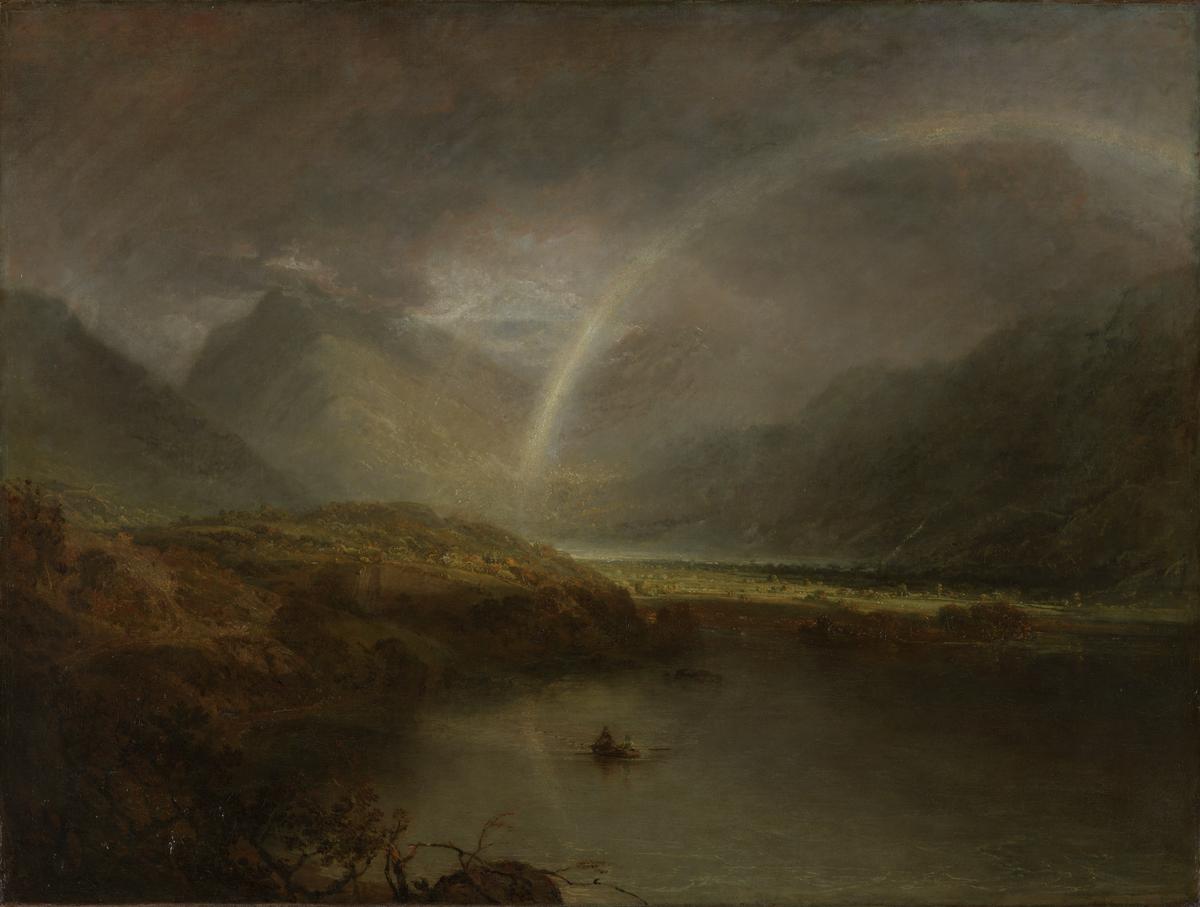
Buttermere Lake, with Part of Cromackwater, Cumberland, a Shower
- Artist: Joseph Mallord William Turner
- Date: exhibited 1798
- Medium: Oil paint on canvas
- Dimensions: support: 889 x 1194 mm
- Museum: Tate Britain
- Collection record: Tate Britain website
Listen to the free audio guide
About this artwork
This is “Buttermere Lake, with Part of Cromackwater, Cumberland, a Shower” by Joseph Mallord William Turner. Painted in 1798, it was shown at the Royal Academy that same year after Turner’s first trip to the Lake District a year earlier. The scene is a dramatic, storm‑filled vista: low, black clouds hover over the lake, and a subtle rainbow arches above the hills, a motif Turner would repeat in many later works.
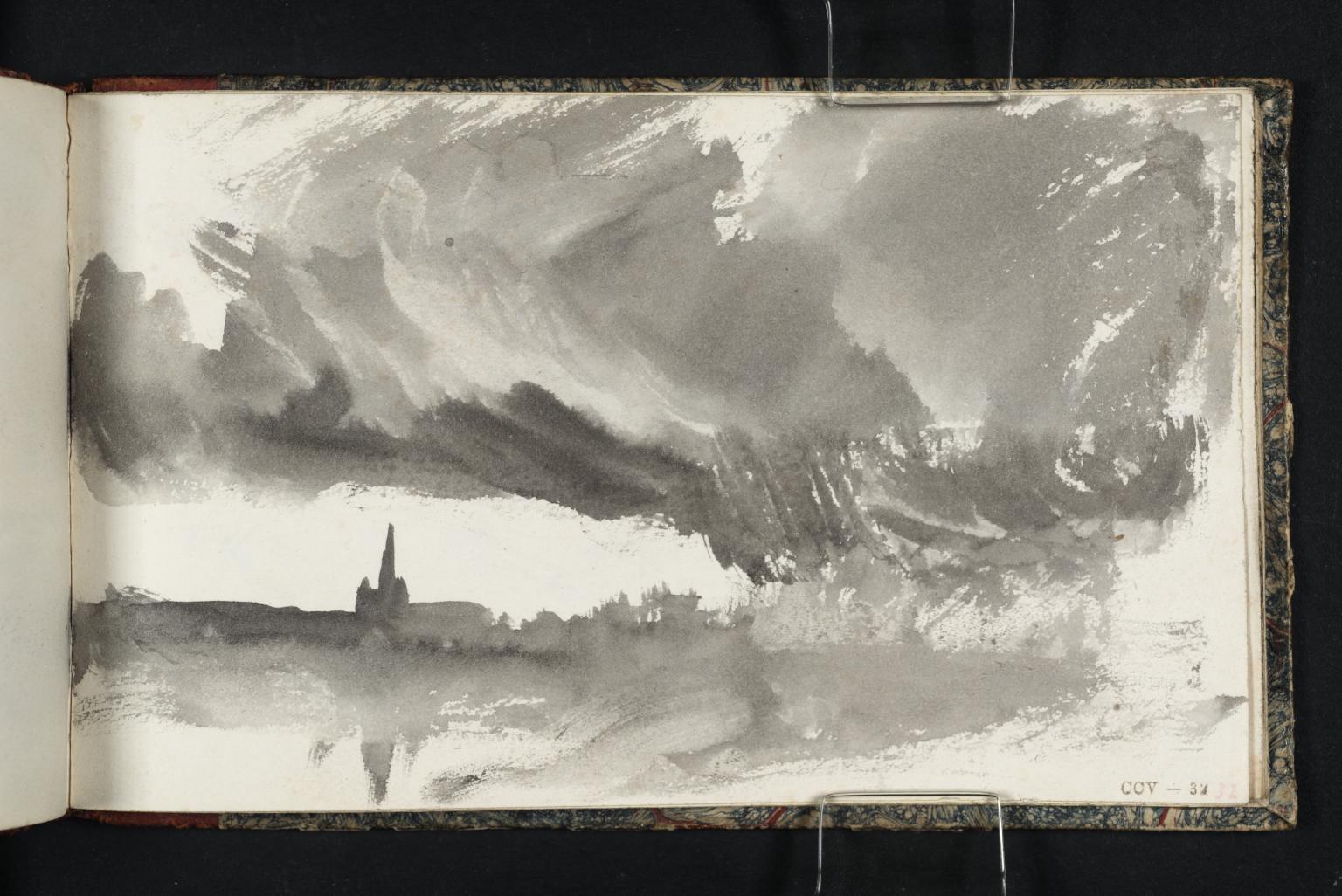
Turner’s inspiration came from a sketchbook watercolour where he had even written “Black” on the lake’s surface to mark the mood he wanted to capture. In the oil he expands that feeling, layering wet, bruised blues and greys, then striking the sky with a bright, almost electric arc of colour. The foreground shows Hay Stacks and the distant Fleetwith Pike, grounding the composition and heightening the sense of depth.
The work is a conscious “Sublime” statement, aiming to leave the viewer in awe of nature’s power. It sits in the Turner Bequest, acquired by the nation in 1856, and has travelled through many exhibitions, echoing Turner’s early fascination with light, weather, and the raw beauty of the English countryside.
See it in person
Buttermere Lake, with Part of Cromackwater, Cumberland, a Shower is in the collection of Tate Britain on Millbank, London — free to enter. Point your phone at any artwork there and audioguide.london plays a free audio guide in six languages — no app download needed.