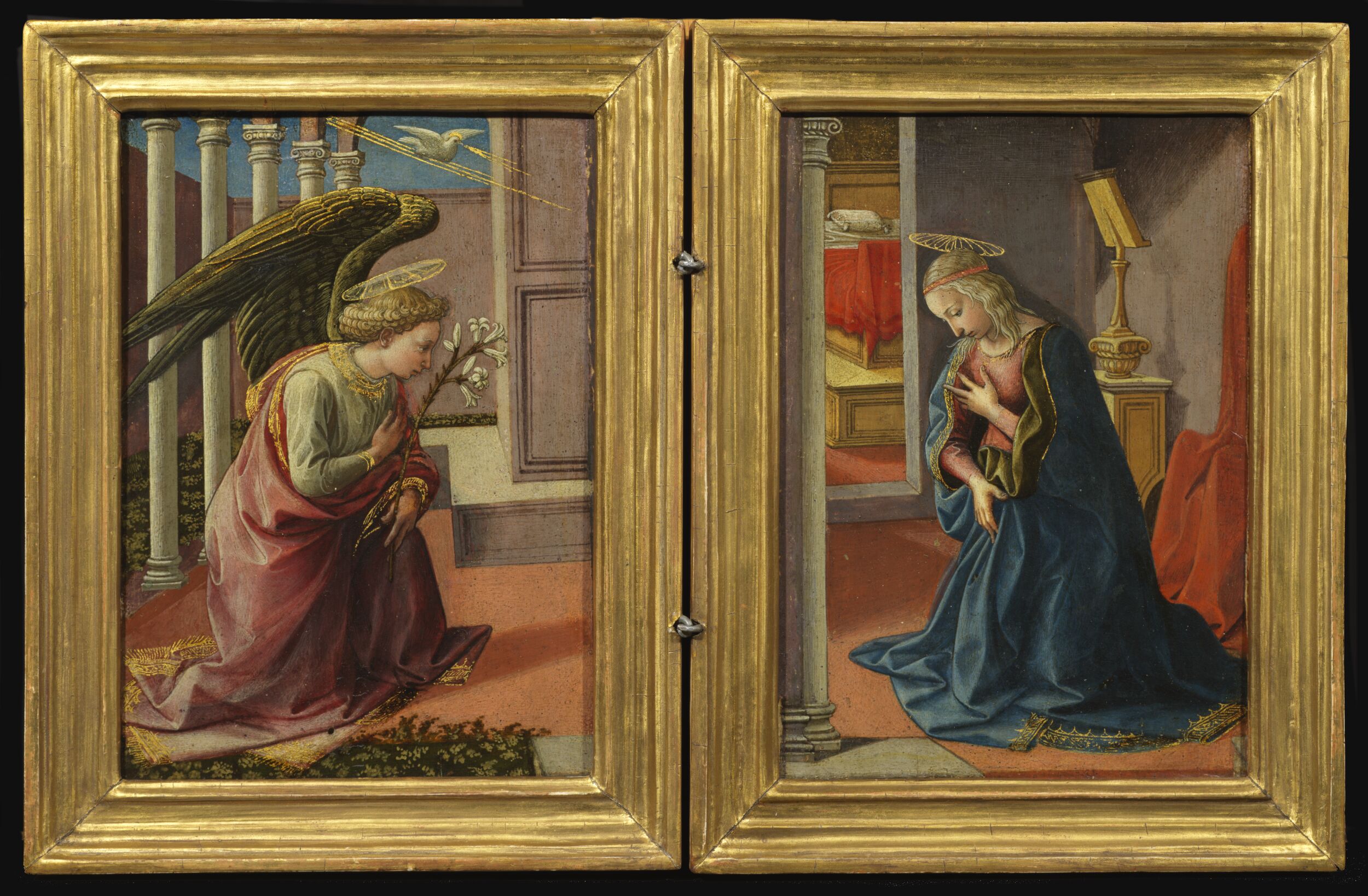
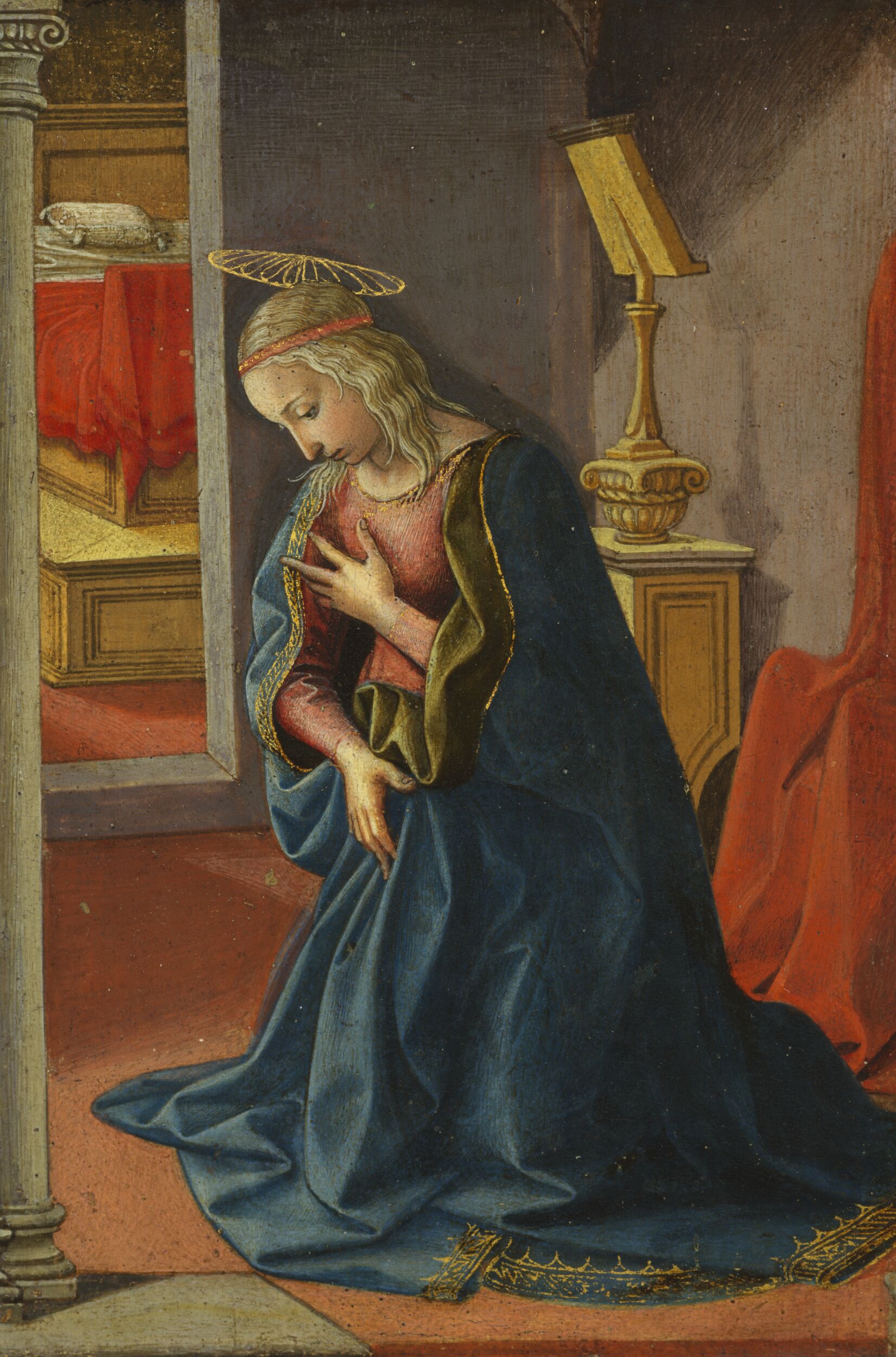
Angel Gabriel (left panel) (recto)Cross with stars enclosed by a mandorla (left panel) (verso)

- Artist: Francesco (Francesco di Stefano) Pesellino
- Date: (circa) 1450 - 1455
- Medium: tempera on panel
- Museum: The Courtauld Gallery
- Collection record: The Courtauld Gallery website
Listen to the free audio guide
About this artwork
This is the Angel Gabriel (left panel) (recto)Cross with stars enclosed by a mandorla (left panel) (verso) painted by Francesco (Francesco di Stefano) Pesellino around 1450‑1455. The work is executed in tempera on panel, a medium that was still popular in the early Italian Renaissance but already beginning to give way to oil. On the front, the angel appears in a flowing robe, her white halo and delicate gestures conveying a sense of divine grace. Her hand holds a lily, a common symbol of purity, and the background is a simple, almost ethereal, blue wash that lifts her into the spiritual realm.
Turn the panel over and you find the verso side, where a crucifix is framed by a mandorla, the almond‑shaped aureole that separates the sacred from the mundane. The cross is illuminated by a subtle golden light, and the stars above the mandorla suggest a celestial endorsement of the crucifixion’s significance. Pesellino’s brushwork here is notably fine, his lines precise, yet the overall effect feels gentle, almost pastoral. The size of the panel is modest, which makes the painting intimate and invites a close, contemplative look. In the broader context of mid‑fifteenth‑century Florentine art, this piece reflects both the lingering influence of Giotto’s chiaroscuro and the early stirrings of the more naturalistic approaches that would soon dominate.
See it in person
Angel Gabriel (left panel) (recto)Cross with stars enclosed by a mandorla (left panel) (verso) hangs in The Courtauld Gallery at Somerset House, London. Point your phone at any artwork there and audioguide.london plays a free audio guide in six languages — no app download needed.