An Extensive Landscape with Ruins
- Artist: Jacob van Ruisdael
- Date: probably 1665-75
- Medium: oil on canvas
- Museum: The National Gallery
- Collection record: The National Gallery website
Listen to the free audio guide
About this artwork
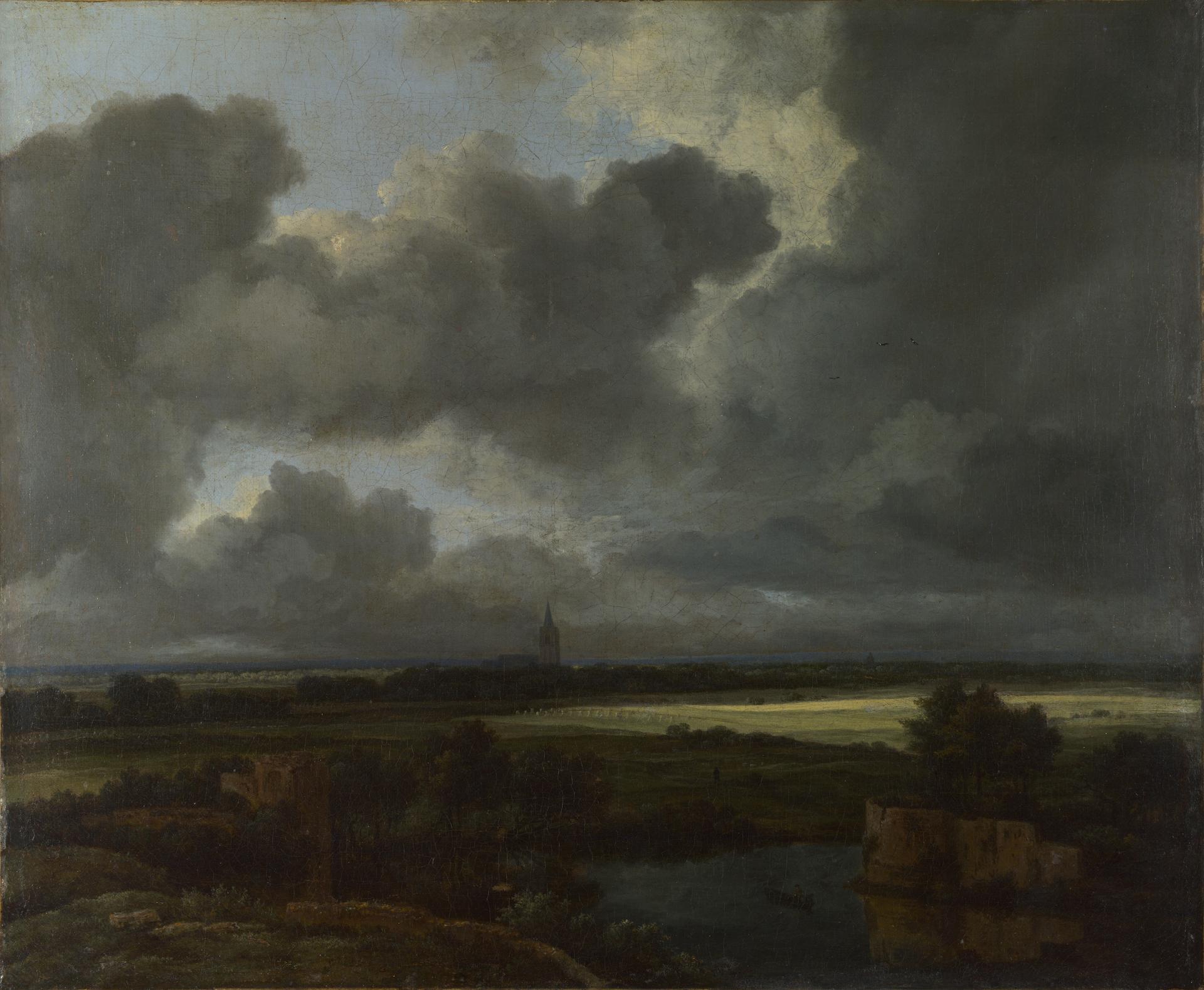
This is "An Extensive Landscape with Ruins" painted in the Dutch north. The sense of fast-changing light brings the whole landscape to life, injecting movement into what otherwise might have been a static scene. This effect helps make it feel as though van Ruisdael has captured a real moment in a real place, but it’s more likely that he was depicting an idealised landscape.
The tower and spire of the church are central to the picture, tall and resilient against an impending storm – a source of strength when times get rough. Other strongholds, like the ruined medieval castle in the foreground, slowly crumble. And if we look deeper, just to the right of the church, there are other flecks of yellow where the sun has broken through the clouds.
The lighting effects may help make it feel as though van Ruisdael captured a real moment in a real landscape, but he almost certainly hasn’t. He’s brought a fantasy to life. The National Gallery has two versions of the scene, with significant differences between them suggesting that van Ruisdael was more interested in arranging key elements in a pleasing way than in describing a particular place.
The painting is thought to have been made around 1665-75 using oil on canvas. Despite much research, no art historian has managed to establish where exactly this scene might be; the church and ruins in the foreground remain unidentified. This painting represents an idealised landscape – based on the countryside around Haarlem – reflecting an idea that van Ruisdael and his customers had about how Holland should look.
See it in person
An Extensive Landscape with Ruins hangs in The National Gallery on Trafalgar Square, London — free to enter. Point your phone at any artwork there and audioguide.london plays a free audio guide in six languages — no app download needed.


