An Estuary in Northern France
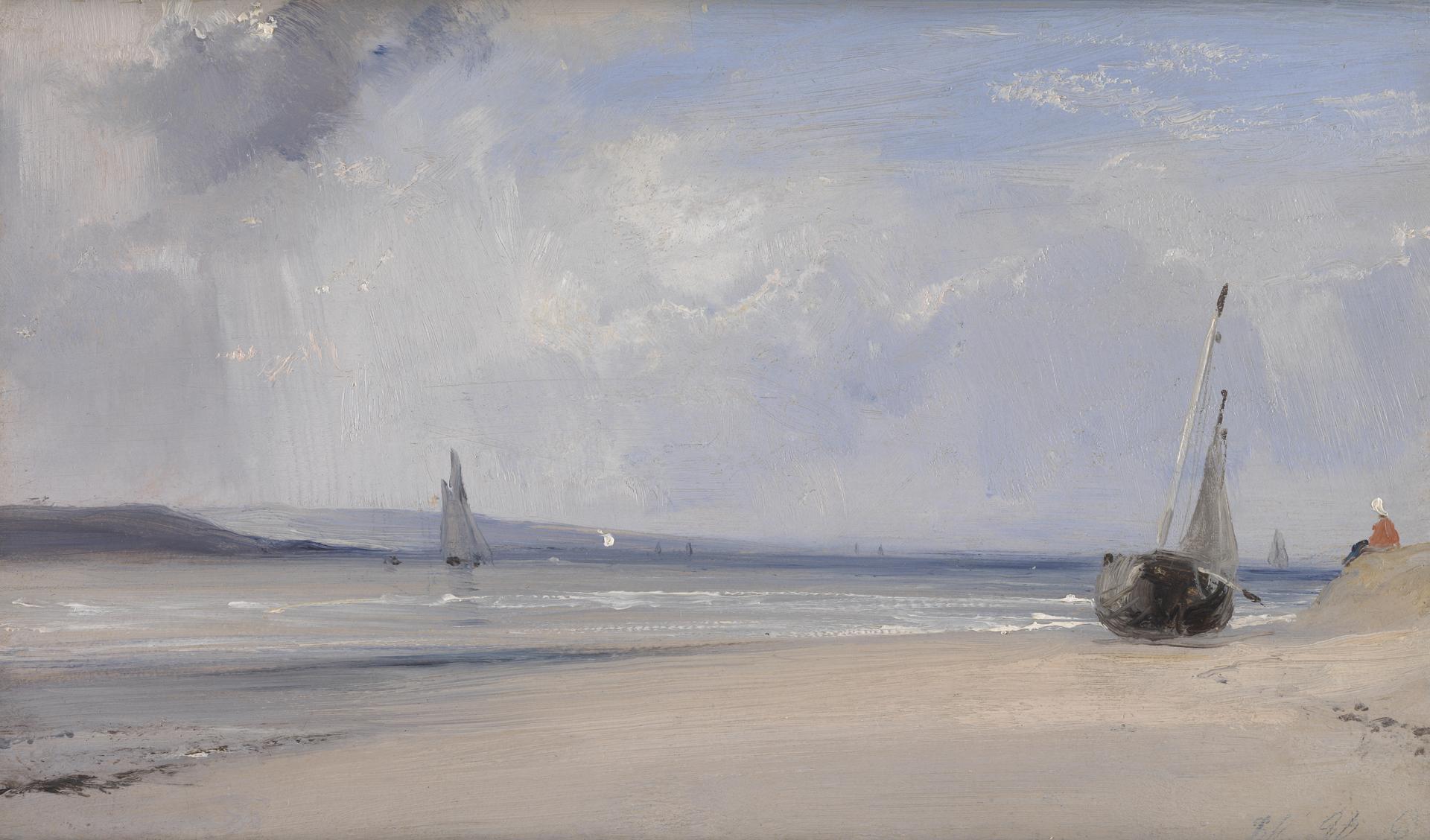
- Artist: Richard Parkes Bonington
- Date: about 1825-7
- Medium: oil on board
- Museum: The National Gallery
- Collection record: The National Gallery website
Listen to the free audio guide
About this artwork
This is "An Estuary in Northern France" by Richard Parkes Bonington. Painted around 1825-7 at La Ferté, on the estuary of the river Somme in northern France, this work showcases Bonington's innovative approach to oil painting.
He used a wet-in-wet technique, painting directly onto wet paint rather than building up layers or glazes over time. This allowed him to recreate the spontaneity of watercolour in oils. Look closely and you can see the brushstrokes through the paint – broad horizontal strokes evoke an expansive blue sky, while vertical strokes create a bank of clouds and a suggestion of rain in the distance.
Some details, such as the seated woman on the right, may have been added later in the studio. Bonington's parents were English but he spent much of his life in France, travelling extensively in Normandy and Picardy. His work was particularly admired by French artists like Eugène Delacroix, who befriended him when they met in Paris.
Bonington's method of painting directly outdoors and recreating the freshness and immediacy of a watercolour sketch in an oil painting had a great impact upon French artists in the 1820s. His technical freedom and expressiveness were highly regarded by his contemporaries, including Delacroix, who described his work as having "lightness of touch" that makes it "a type of diamond that flatters and ravishes the eye".
See it in person
An Estuary in Northern France hangs in The National Gallery on Trafalgar Square, London — free to enter. Point your phone at any artwork there and audioguide.london plays a free audio guide in six languages — no app download needed.