An Alchemist
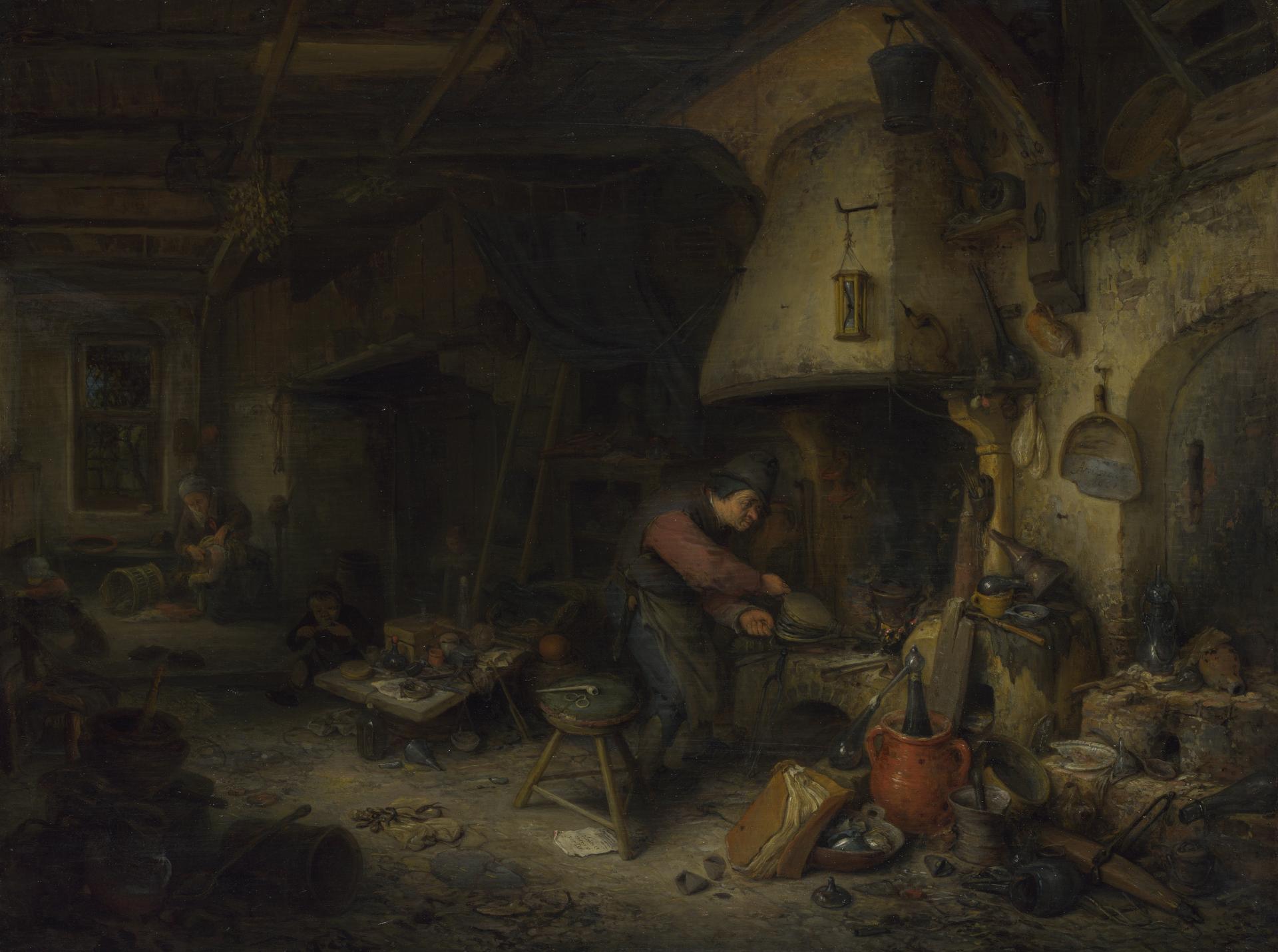
- Artist: Adriaen van Ostade
- Date: 1661
- Medium: oil on wood
- Museum: The National Gallery
- Collection record: The National Gallery website
Listen to the free audio guide
About this artwork
This is the "An Alchemist" by Adriaen van Ostade. Painted in 1661, it's a vivid depiction of an alchemist trying to turn base metals into silver or gold. His shabby and chaotic surroundings suggest that he's become so obsessed with his work that he's neglected everything else.
Take a look at the cluttered room - jars, bottles, and tools are scattered everywhere. The plaster is peeling off the walls, leaving bricks exposed. On the stool, you'll see a discarded piece of paper that reads 'oleum et operam perdis', meaning 'oil and work is wasted'. This phrase is from a book about metal mining and refining.
The alchemist's family is visible in the background - his wife is tending to their baby while the two young children play. But he pays them no attention, too focused on his pursuit of riches. Van Ostade uses a visual hierarchy to emphasize this contrast between the highly detailed foreground and the sketchy quality of the background figures.
The use of warm purple and brownish hues creates deep shadows, emphasizing the separation between the alchemist's world and that of his family. And if you look closely, you'll see the artist's signature and date on a shovel hanging next to the fireplace - it adds a sense of intimacy and presence to this scene.
See it in person
An Alchemist hangs in The National Gallery on Trafalgar Square, London — free to enter. Point your phone at any artwork there and audioguide.london plays a free audio guide in six languages — no app download needed.