Allegory of Prudence
- Artist: Luca Giordano
- Date: early 1680s
- Medium: oil on canvas
- Museum: The National Gallery
- Collection record: The National Gallery website
Listen to the free audio guide
About this artwork
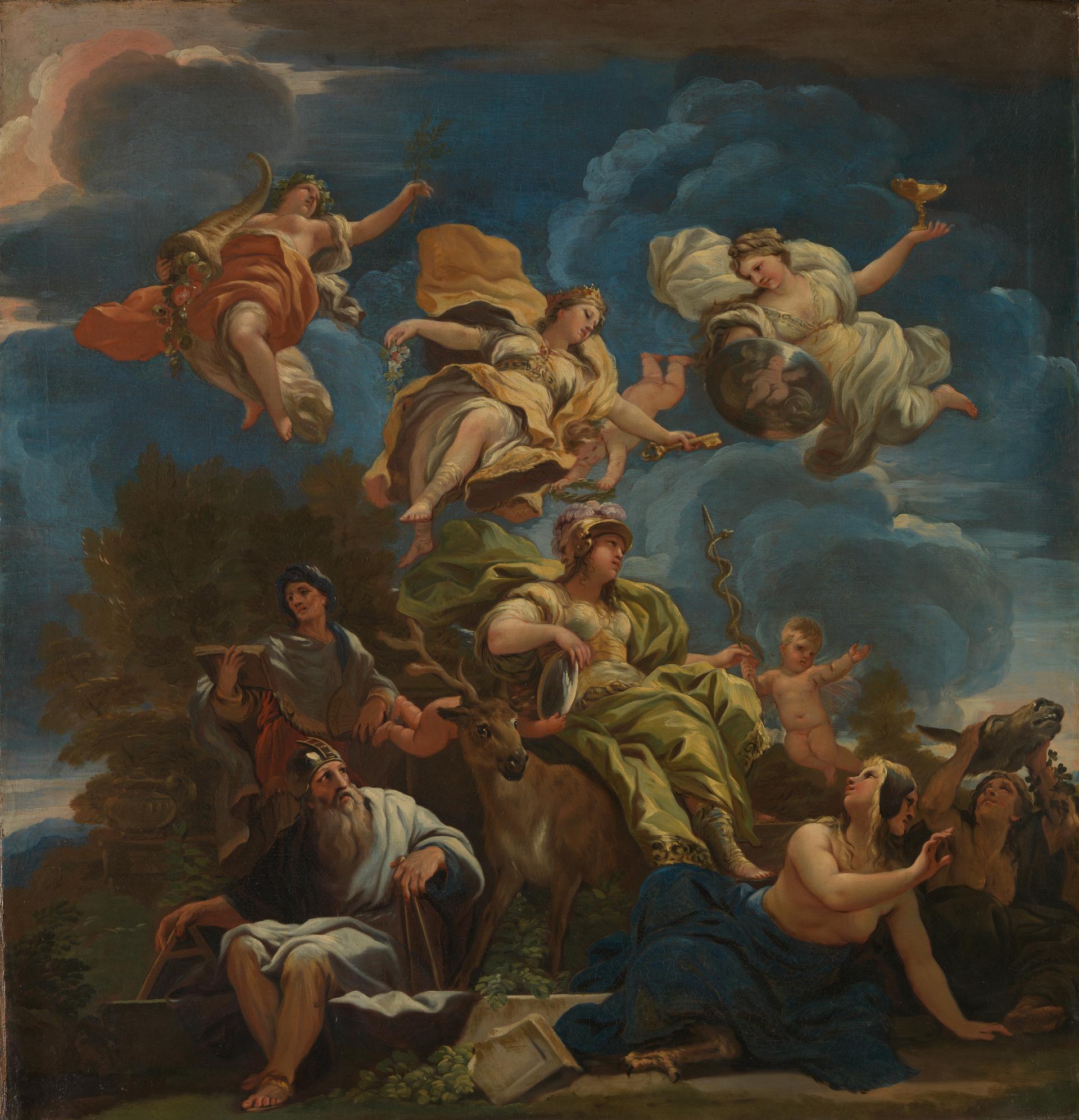
This is the Allegory of Prudence by Luca Giordano. Painted in the Italian north, it represents one of the four Cardinal Virtues, which were first identified by the philosopher Plato and later adopted by the Roman Catholic Church.
Prudence carries an arrow with a serpent entwined around it, and on her deer ride is a symbol of prudence because it was believed to move cautiously on account of the weight of its antlers. Two mathematicians, probably Archimedes and Euclid, are depicted on the left, representing Order and Reason.
Cowering at Prudence's feet is Fraud, a two-faced figure with claws instead of feet, while Ignorance holds up a donkey's head. In the sky above are figures representing Abundance, Grace, and Wellbeing, each holding unique symbols associated with their virtues.
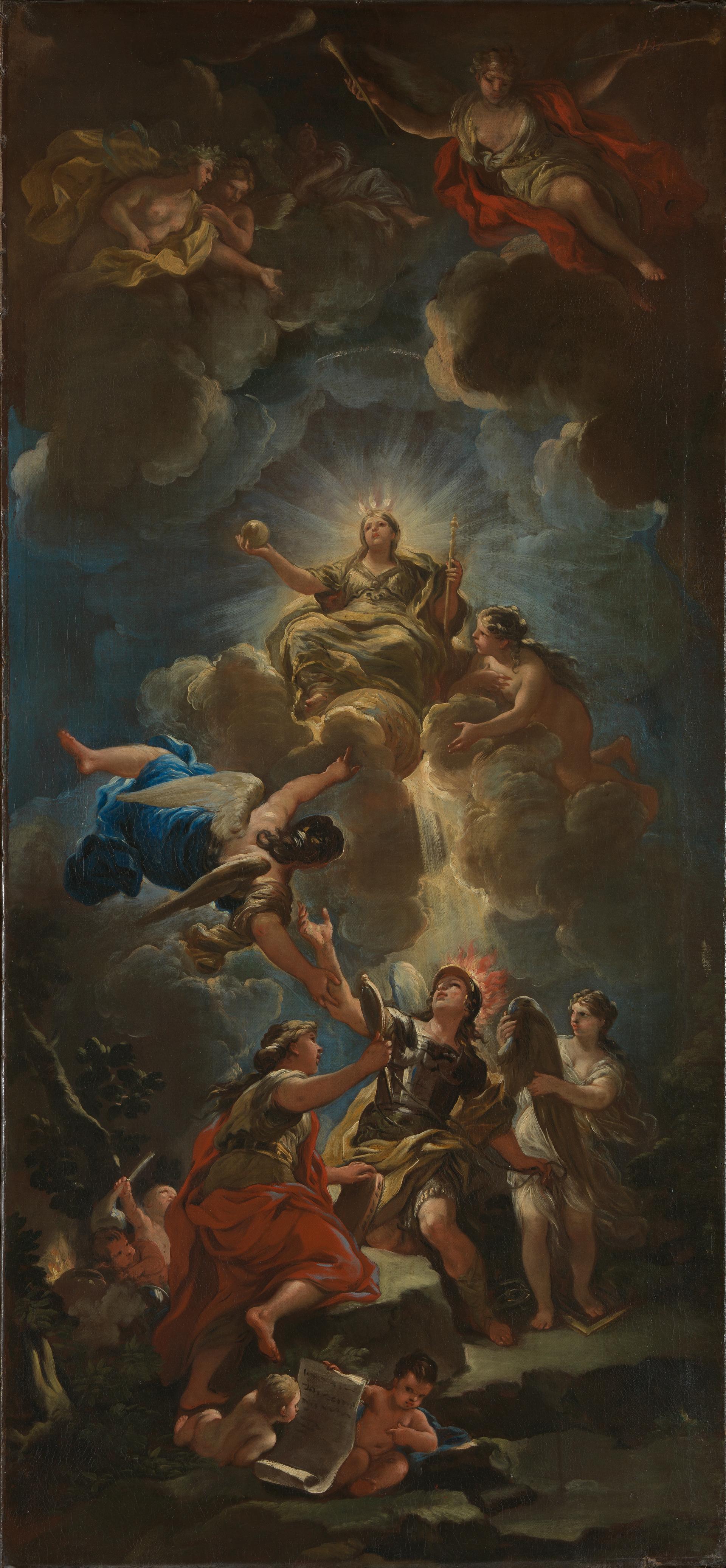
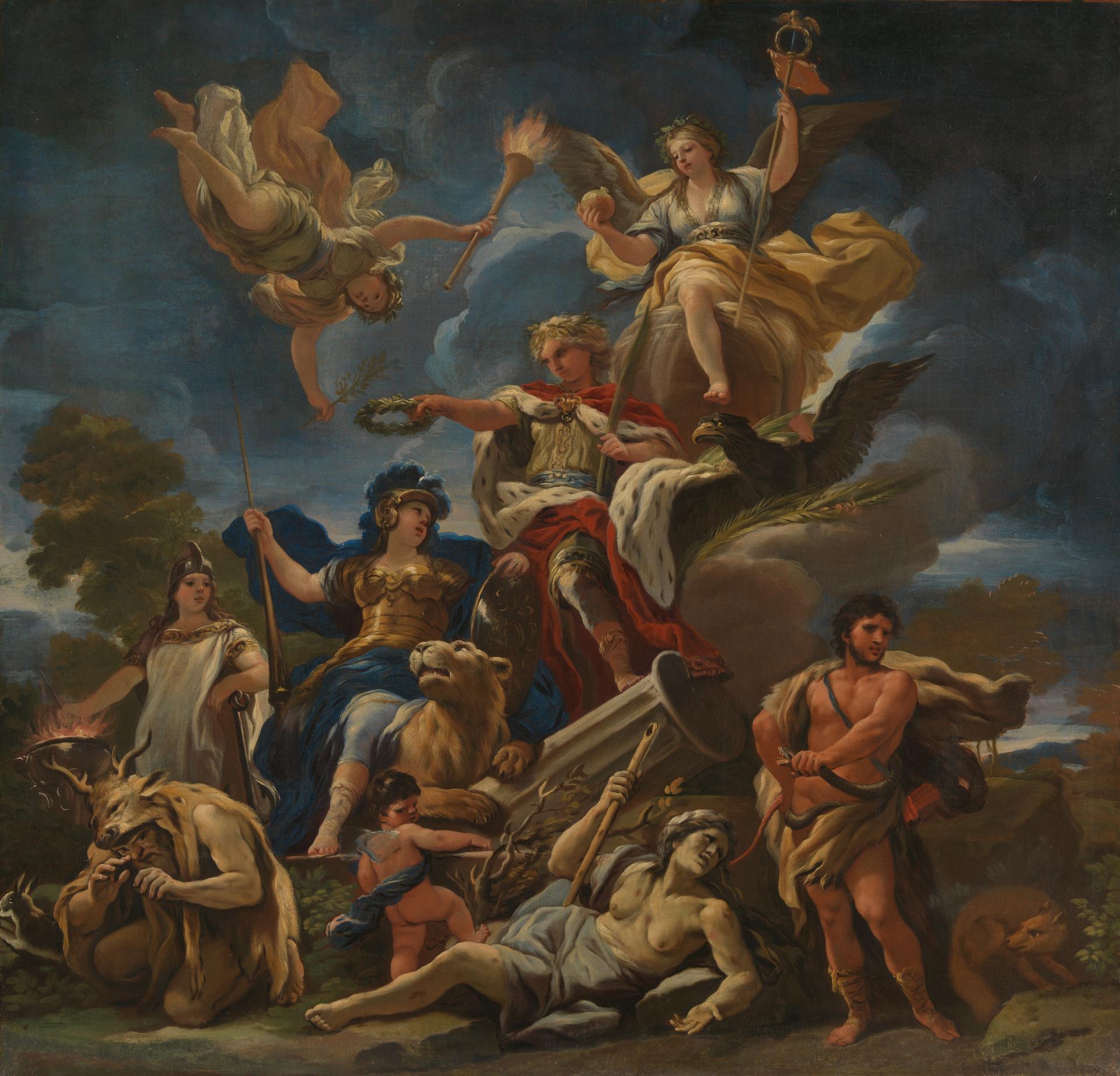
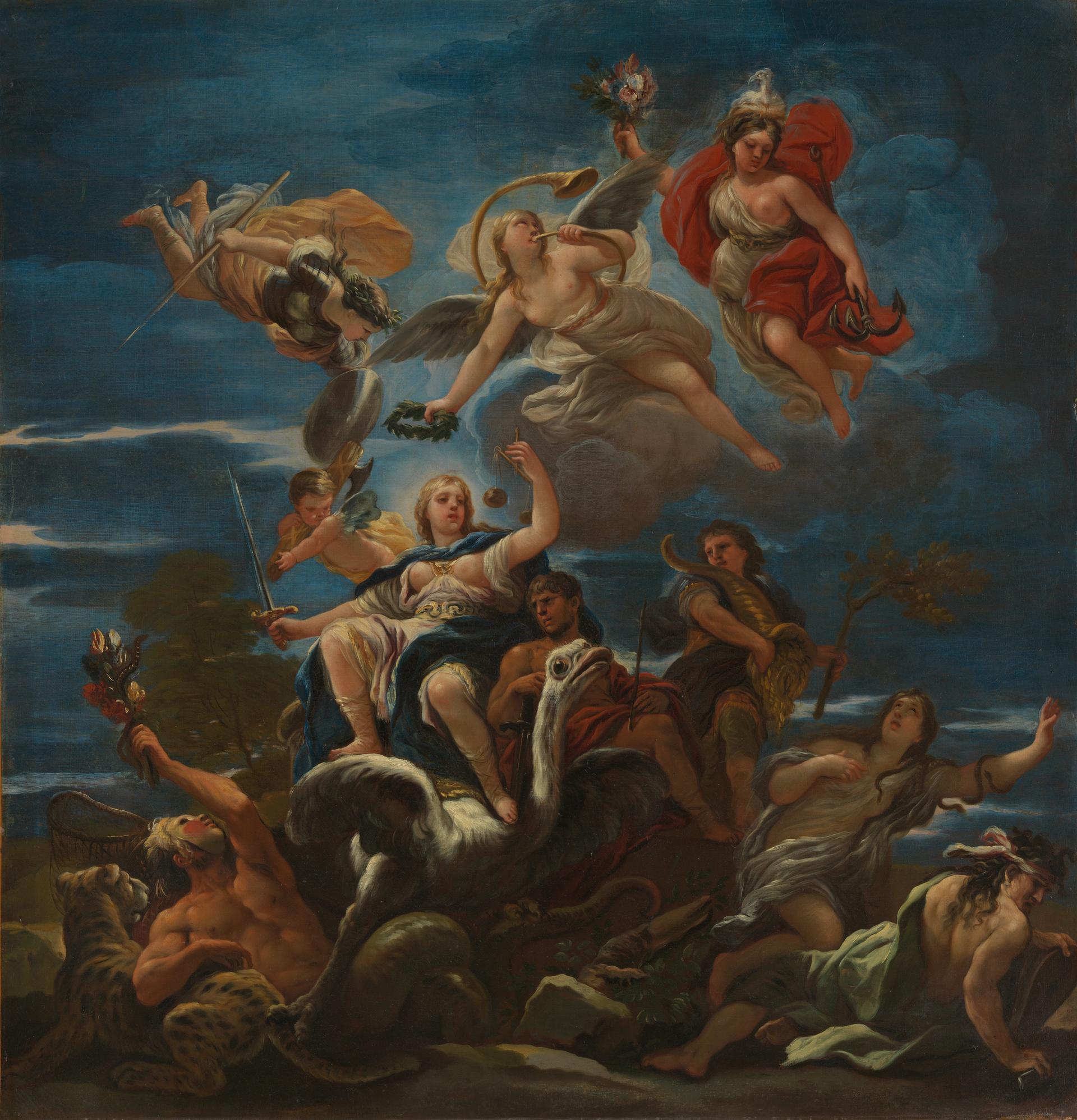
This painting was made in preparation for the ceiling frescoes in the Palazzo Medici Riccardi in Florence between 1682-5. It's one of ten models that are part of this collection, showcasing Giordano's skill as a painter.
See it in person
Allegory of Prudence hangs in The National Gallery on Trafalgar Square, London — free to enter. Point your phone at any artwork there and audioguide.london plays a free audio guide in six languages — no app download needed.