Afternoon in the Tuileries Gardens
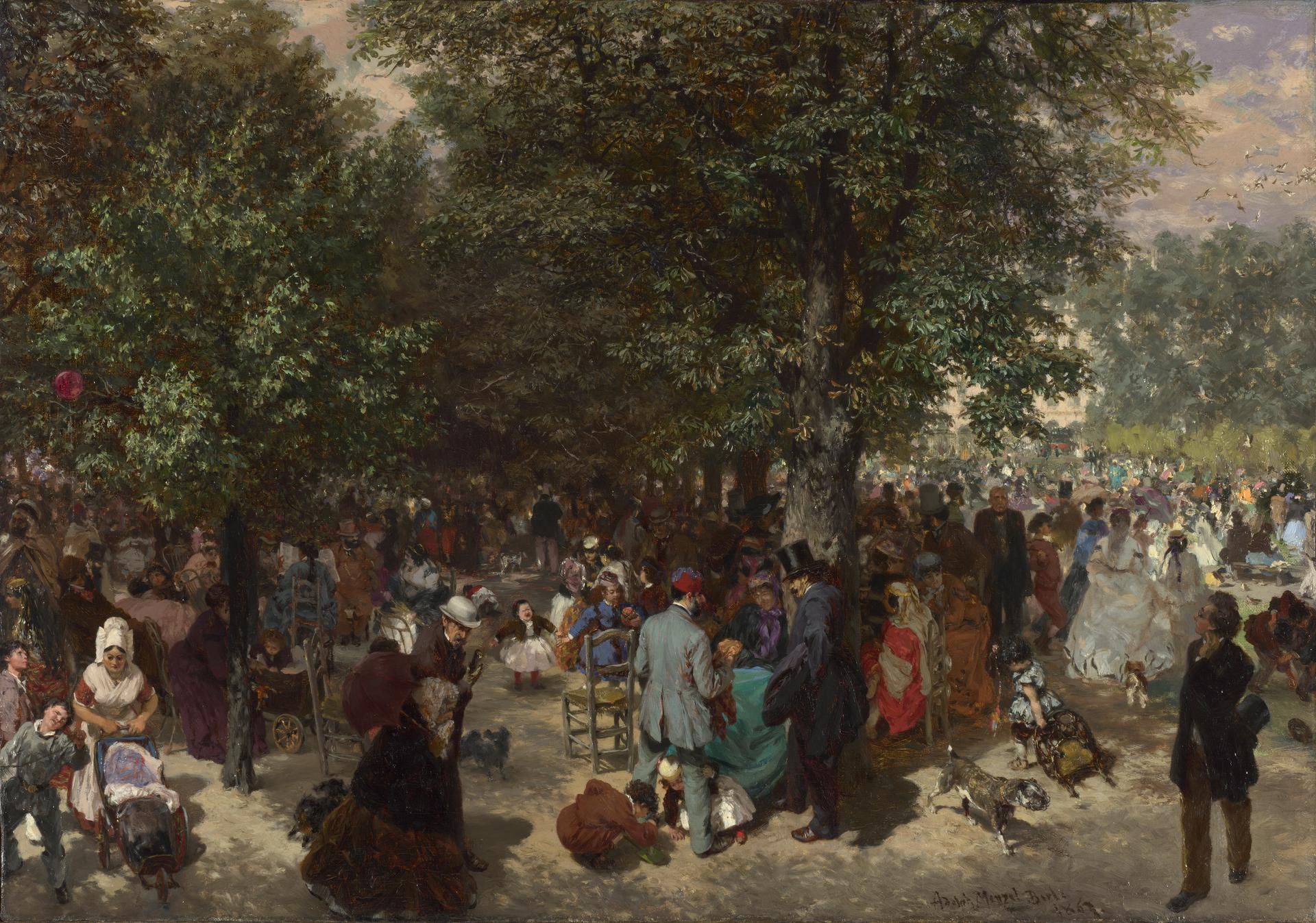
- Artist: Adolph Menzel
- Date: 1867
- Medium: oil on canvas
- Museum: The National Gallery
- Collection record: The National Gallery website
Listen to the free audio guide
About this artwork
This is "Afternoon in the Tuileries Gardens" by Adolph Menzel. Painted in 1867, it's a beautiful example of the artist's ability to capture modern urban life. Menzel was inspired by his visit to Paris, where he saw the work of other artists, including Edouard Manet.
You might notice that this painting is similar to Manet's own work, "Music in the Tuileries Gardens", which was exhibited at a pavilion near the Universal Exhibition during Menzel's time in Paris. In fact, Menzel directly quoted elements from Manet's picture, such as the man in profile and the crouching child.
But while it may seem like a copy or pastiche at first glance, "Afternoon in the Tuileries Gardens" is actually a unique work that showcases Menzel's own style. The composition is different, with deep paths through the trees that create a sense of depth and space. And the figures in the foreground are painted in incredible detail, while those further back are more freely rendered.
What's really interesting about this painting is how it shows a different view of modern life. While Manet's picture focuses on the Parisian haute bourgeoisie, Menzel's work depicts a diverse crowd of people from all ages and classes. This is just one example of the many ways that artists were experimenting with new styles and techniques in the mid-19th century.
See it in person
Afternoon in the Tuileries Gardens hangs in The National Gallery on Trafalgar Square, London — free to enter. Point your phone at any artwork there and audioguide.london plays a free audio guide in six languages — no app download needed.