After the Audience
- Artist: Lawrence Alma-Tadema
- Date: 1879
- Medium: Oil on wood
- Museum: The National Gallery
- Collection record: The National Gallery website
Listen to the free audio guide
About this artwork
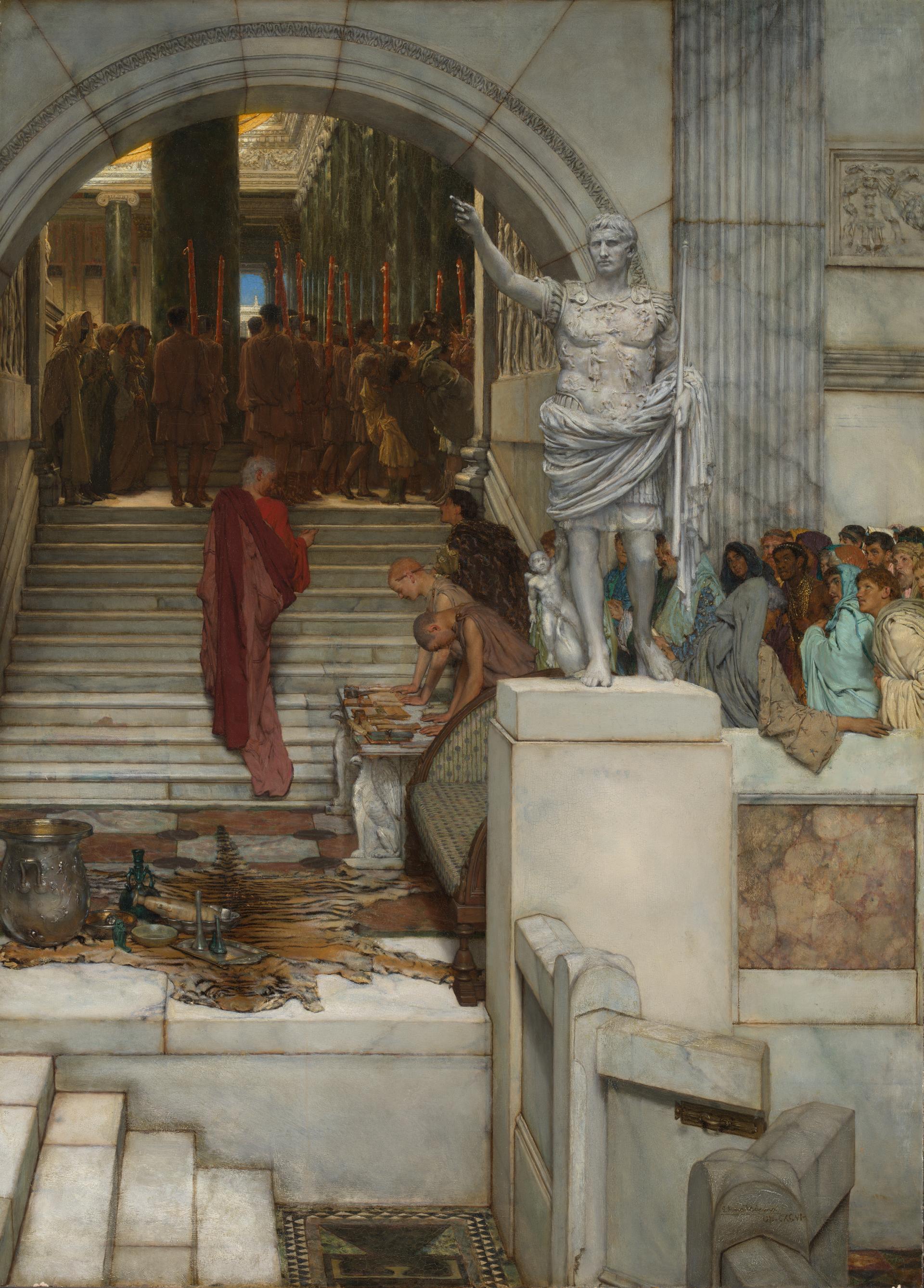
This is the "After the Audience" by Lawrence Alma-Tadema. Painted in the late 19th century, it's a masterpiece that showcases the artist's attention to detail and historical accuracy.
The painting depicts Marcus Vipsanius Agrippa, a Roman general and statesman, walking away from his villa after an audience with petitioners below. The scene is set against the backdrop of an impressive villa, with marble expanses and intricate details. Note how Alma-Tadema has captured the drama of Agrippa's red cape falling behind him.
On the right, a crowd of people demonstrates the artist's ability to convey various emotions. And dominating the foreground is a sculpture of Augustus Caesar, a symbol of imperial power and authority. Based on the famous 'Augustus of Prima Porta', it highlights Alma-Tadema's desire for historical accuracy.
The painting was created in 1879, likely as an homage to Sir William Armstrong, who had admired Alma-Tadema's earlier work. It was well-received when exhibited at the Royal Scottish Academy that year, and remains a testament to the artist's skill and ambition.
See it in person
After the Audience hangs in The National Gallery on Trafalgar Square, London — free to enter. Point your phone at any artwork there and audioguide.london plays a free audio guide in six languages — no app download needed.