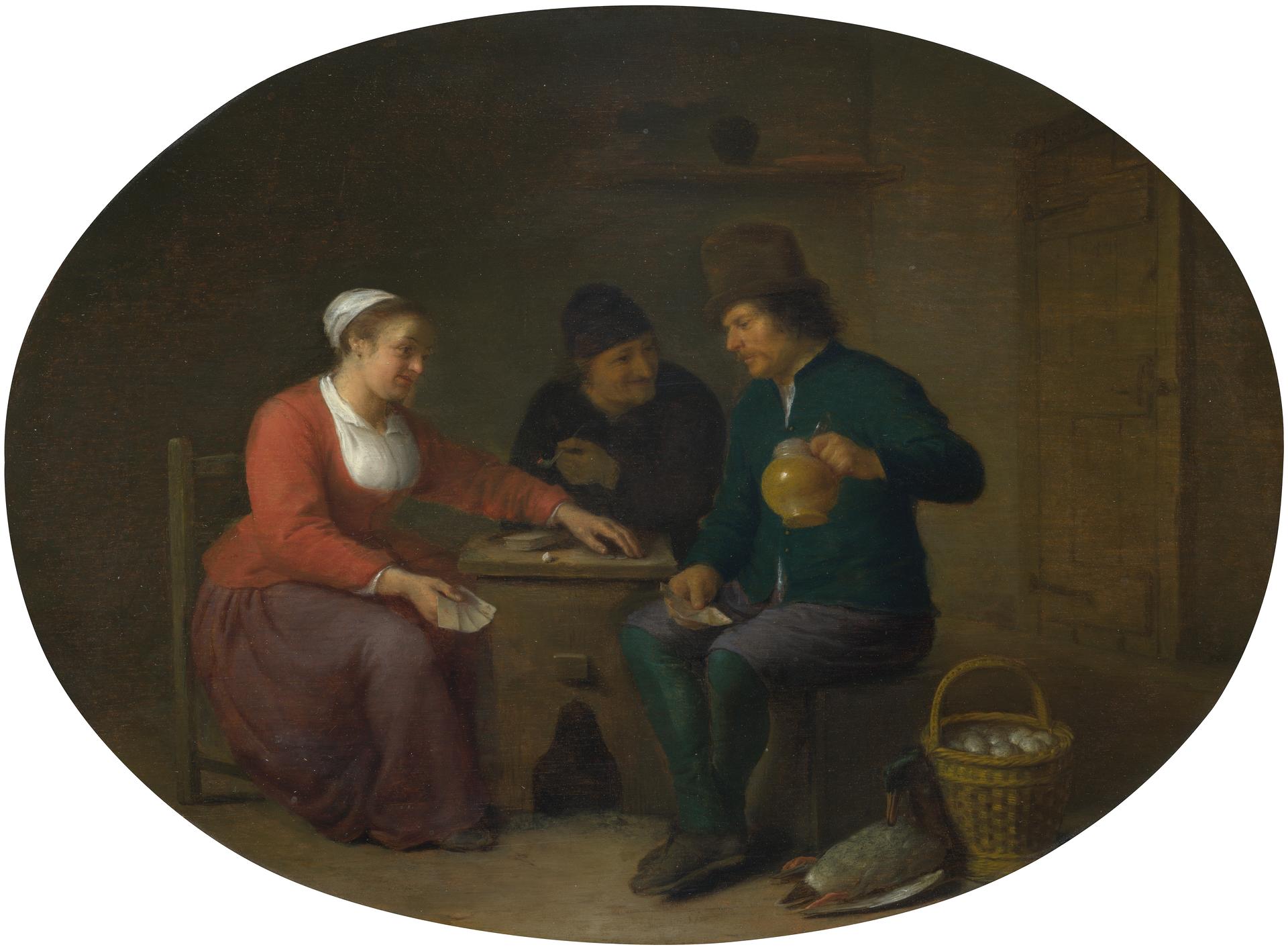
A Woman playing Cards with Two Peasants
- Artist: Hendrick Sorgh
- Date: 1644
- Medium: oil on wood
- Museum: The National Gallery
- Collection record: The National Gallery website
Listen to the free audio guide
About this artwork
This is "A Woman playing Cards with Two Peasants" by Hendrick Sorgh. Painted in the Dutch tradition of the 17th century, it's a delightful and thought-provoking work. On the surface, we have a simple scene: a woman winning a game of cards against two men.
But look closer, and you'll see that this painting is full of subtle hints and double meanings. The ace of hearts she appears to have won with is often associated with an amorous encounter, and the onlooker's pipe is a common phallic symbol. So, is the woman really just winning the game, or is she tempting the men into a vice?
Some art historians think that this painting plays on the theme of women making fools of lustful men, much like its companion piece "Two Lovers at Table". But others believe that it provides a counter view, portraying the woman as a victim rather than a temptress. The duck and basket of eggs in the foreground might suggest that one of the men is being deceived, but which one?
The beauty of this painting lies in its ambiguity – it leaves us to decide what's really going on. Is the woman the trickster, or is she just enjoying her win? It's up to you to interpret the scene and decide for yourself.
See it in person
A Woman playing Cards with Two Peasants hangs in The National Gallery on Trafalgar Square, London — free to enter. Point your phone at any artwork there and audioguide.london plays a free audio guide in six languages — no app download needed.