A Warrior adoring the Infant Christ and the Virgin
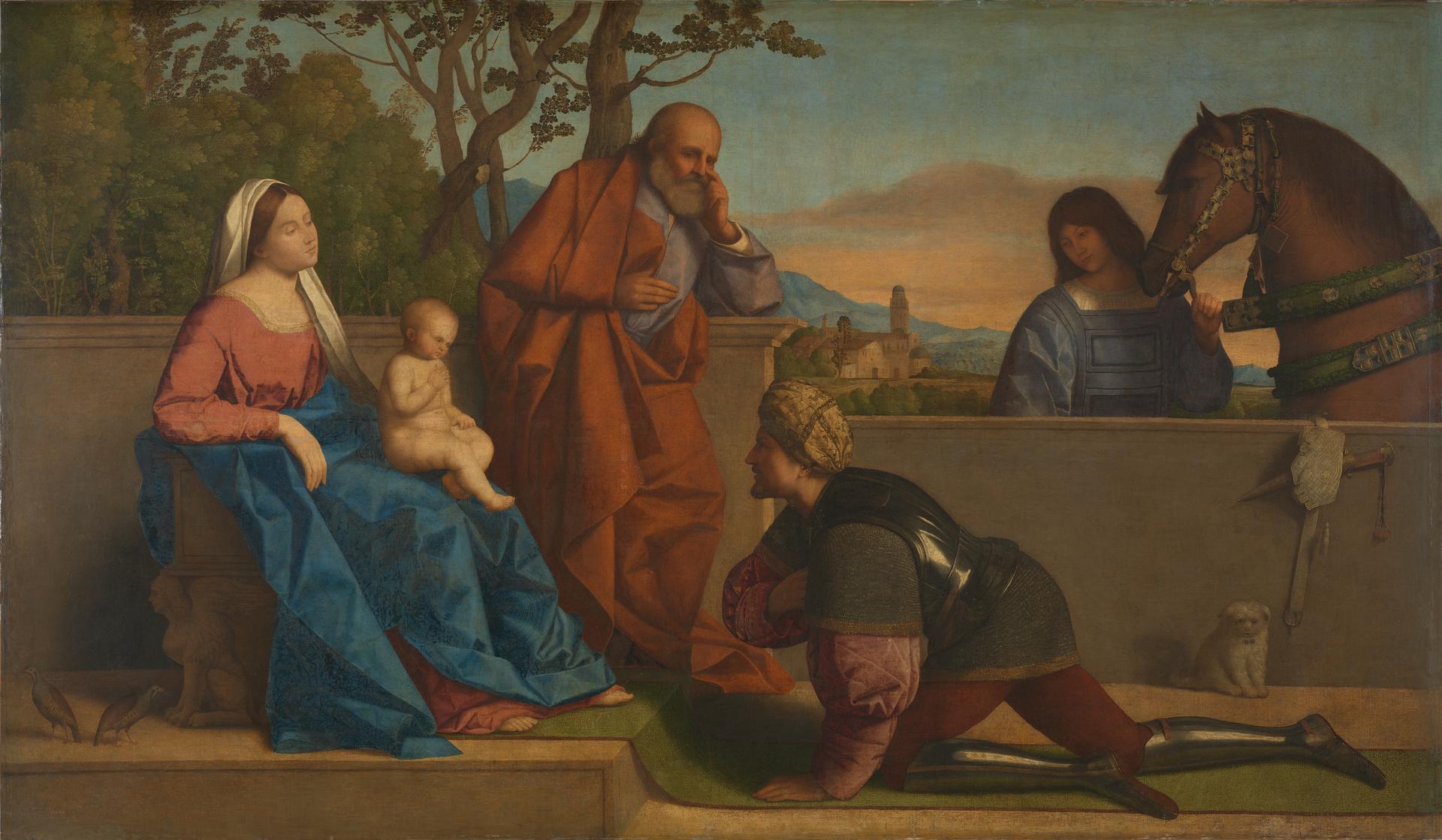
- Artist: Vincenzo Catena
- Date: after 1520
- Medium: oil on canvas
- Museum: The National Gallery
- Collection record: The National Gallery website
Listen to the free audio guide
In the museum now? Point your phone at the next artwork and hear its guide.
About this artwork
This is "A Warrior adoring the Infant Christ and the Virgin" painted in the Italian north, specifically in the region of Venice. The wide rectangular shape of this painting is typical of Venetian votive pictures made to thank the Virgin Mary or a patron saint.
The Virgin sits on a stone throne ornamented with sphinxes, symbolising wisdom, while Saint Joseph stands beside her. A warrior approaches the Virgin and Child on his knees, his right hand to his heart, his face in shadow. He wears European armour, but there are hints of Islamic influence in his headdress, horse trappings, curved dagger, and belt.
The image appears to be unique in showing a Muslim warrior kneeling in adoration before the Virgin and Child. The infant Christ raises his right hand in blessing while a page in Venetian costume stands behind the wall holding the warrior’s horse. This may commemorate the warrior’s conversion to Christianity or the hope for universal peace.
The painting's style and use of symbolism suggest that it may have been created during a time when there was a desire for greater understanding and unity between the Christian and Islamic worlds, a concept reflected in the artist's use of Islamic motifs alongside European armour.
See it in person
A Warrior adoring the Infant Christ and the Virgin hangs in The National Gallery on Trafalgar Square, London — free to enter. Point your phone at any artwork there and audioguide.london plays a free audio guide in six languages — no app download needed.