A Scene from ‘The Beggar’s Opera’ VI
- Artist: William Hogarth
- Date: 1731
- Medium: Oil paint on canvas
- Dimensions: support: 572 x 762 mm
- Museum: Tate Britain
- Collection record: Tate Britain website
Listen to the free audio guide
About this artwork
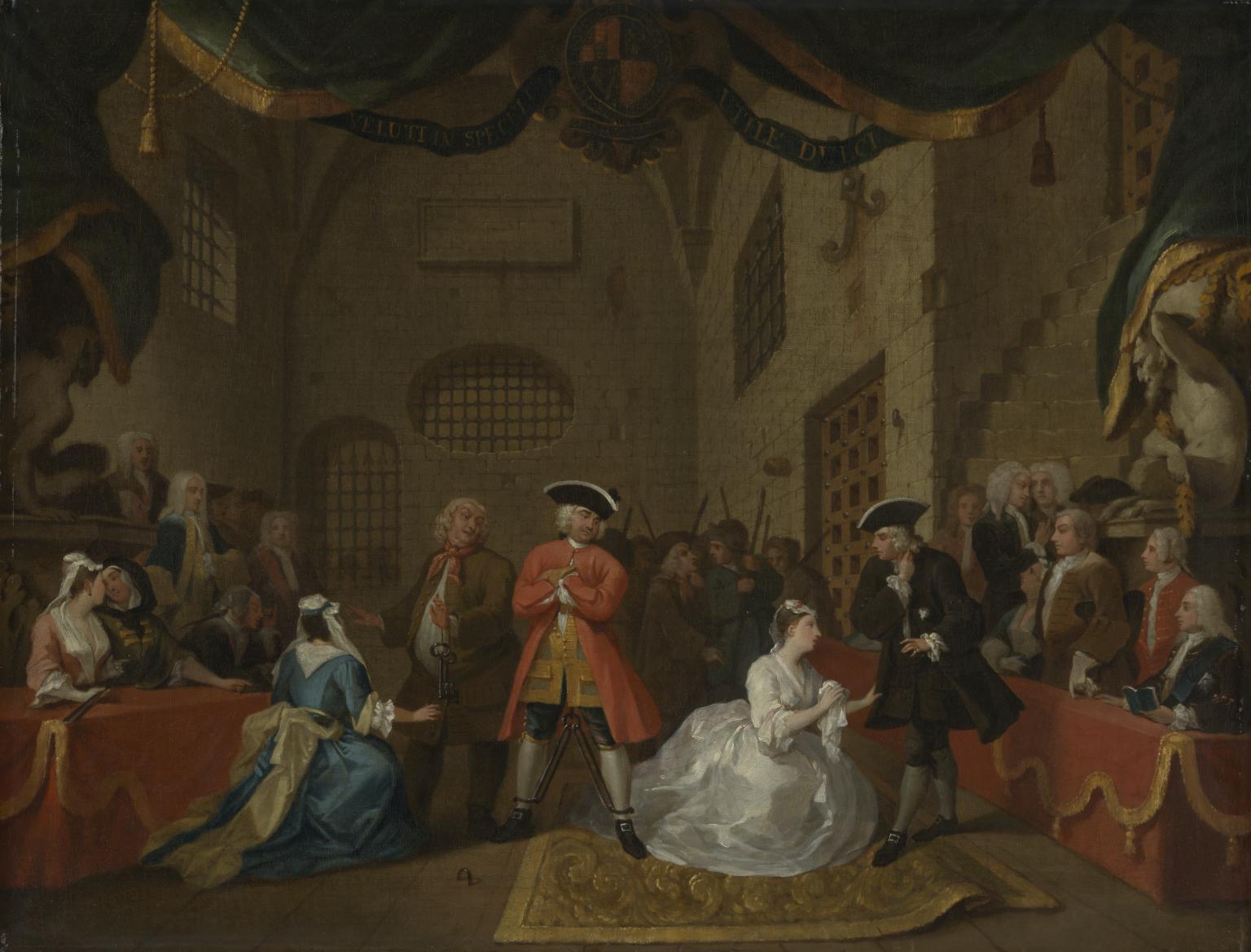
This is the "A Scene from ‘The Beggar’s Opera’ VI" by William Hogarth. Painted in 1731, it’s one of the earliest oil portraits of an English stage show. Hogarth, a lifelong theatre fan, captured the moment in Act III when the highwayman Macheath—his scarlet‑clad hero—stands chained in the centre of a Newgate prison set. To his left, a woman, probably Lucy Lockit, kneels pleading, while to the right, Polly Peachum, played by Lavinia Fenton, looks directly at the Duke of Bolton, who sits in the box and had become Fenton’s real‑life lover.
The canvas is full of theatrical details: the audience in boxes, a curtain, and a royal coat of arms topped with Latin ribbons that read “veluti in speculum” and “utile dulci”. These inscriptions frame the scene as a mirror of society, a theme Hogarth loved. The work was bought for the Tate in 1909, but its history dates back to the opera’s 1728 premiere at Lincoln’s Inn Fields Theatre, a hit that mixed ballads with bawdy characters and shook the London crowd.
It’s a snapshot of a scandalous moment, yet a light‑hearted satire—Hogarth’s early attempt to bring the theatre onto canvas.
See it in person
A Scene from ‘The Beggar’s Opera’ VI is in the collection of Tate Britain on Millbank, London — free to enter. Point your phone at any artwork there and audioguide.london plays a free audio guide in six languages — no app download needed.