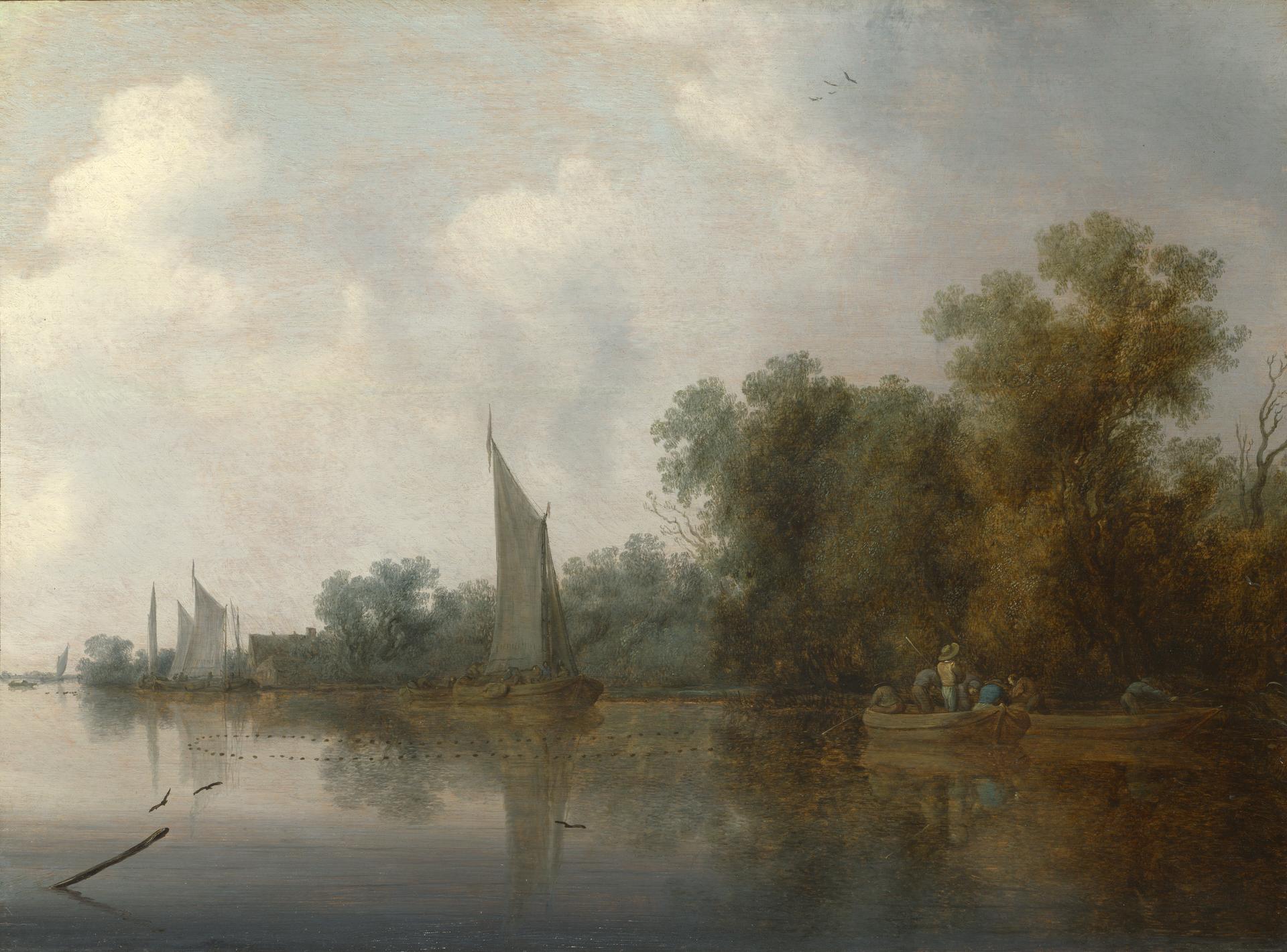
A River with Fishermen drawing a Net
- Artist: Salomon van Ruysdael
- Date: 1630-5
- Medium: oil on wood
- Museum: The National Gallery
- Collection record: The National Gallery website
Listen to the free audio guide
About this artwork
This is the "A River with Fishermen drawing a Net" painting by Salomon van Ruysdael. Painted in the Netherlands around 1630, it's an example of Dutch Golden Age art. The calm and serene atmosphere is immediately noticeable - the water is flat and the reflections are perfect.
Even the billowing clouds seem to pause overhead to cast shadows on the river. No wind stirs the sails, no flags lift in a breeze and the men in the boat are crouched and still. You might think this painting is purely decorative and restorative at first glance, but take a closer look.
The black dots making a semi-circle on the still water are actually cork floats defining the outline of a fishing net. Fishing was one of the industries that gave the Dutch Republic its wealth. These fishermen aren't just ordinary working men - they're thought worthy of a picture because they were part of the pride that the Dutch had in their building of a new nation.
Salomon van Ruysdael's use of soft muted greys, greens and browns creates a soothing atmosphere. He was one of a family of painters who specialised in landscapes. The technique of showing distance by portraying a spit of land cutting across the canvas on the diagonal is particularly his own style.
In this painting, Salomon captures not just the beauty of the Dutch landscape but also its importance to the nation's economy and identity.
See it in person
A River with Fishermen drawing a Net hangs in The National Gallery on Trafalgar Square, London — free to enter. Point your phone at any artwork there and audioguide.london plays a free audio guide in six languages — no app download needed.