A Pagan Sacrifice
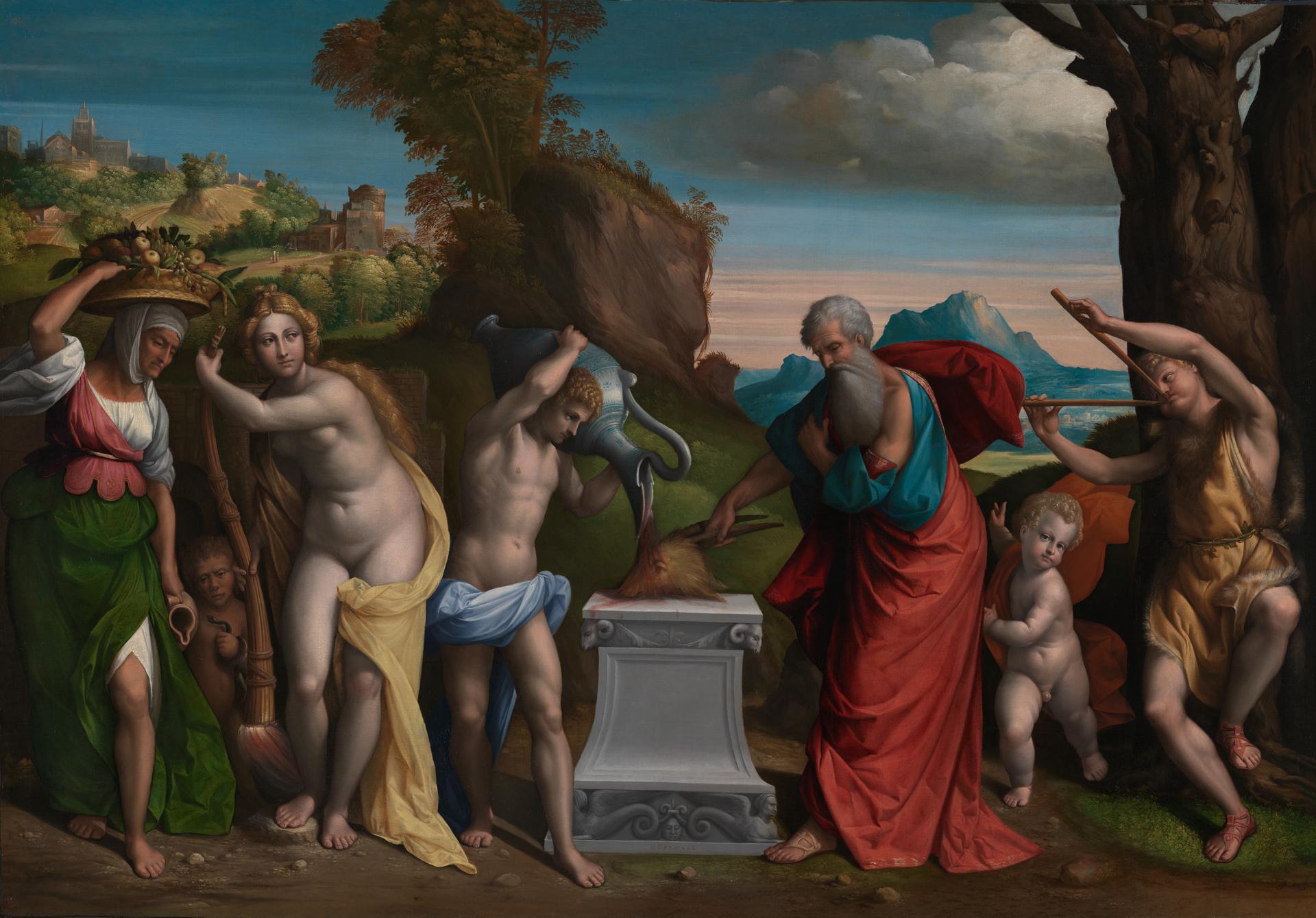
- Artist: Garofalo
- Date: 1526
- Medium: oil on canvas
- Museum: The National Gallery
- Collection record: The National Gallery website
Listen to the free audio guide
About this artwork
This is "A Pagan Sacrifice" by Garofalo. Painted in the Italian north, it's a fascinating work from 1526, made with oil on canvas. At first glance, this painting may seem like a ritualistic scene, but actually, it represents an ancient funeral.
The artist took inspiration from an illustration in Francesco Colonna's book "Hypnerotomachia Poliphili", published in Venice in 1499. The figures in the painting match those in the woodcut illustration, but none are copied exactly. This level of detail is quite rare for Renaissance paintings, which often had more interpretive takes on their sources.
You'll notice that the altar has a date inscribed in Roman numerals - 1526 - whereas the original illustration features an inscription to Valeria, a beloved figure from antiquity. The figures themselves are also different, being living rather than carved marble, and set against a distant landscape. This was likely painted for a specific setting, given its unusual lighting from the right.
Garofalo's work is notable for its blend of classical references with contemporary sensibilities. His patron, Alfonso I d'Este, Duke of Ferrara, may have commissioned this painting or inspired it through his own interests in ancient art and mythology.
See it in person
A Pagan Sacrifice hangs in The National Gallery on Trafalgar Square, London — free to enter. Point your phone at any artwork there and audioguide.london plays a free audio guide in six languages — no app download needed.