A Man with Pansies and a Skull
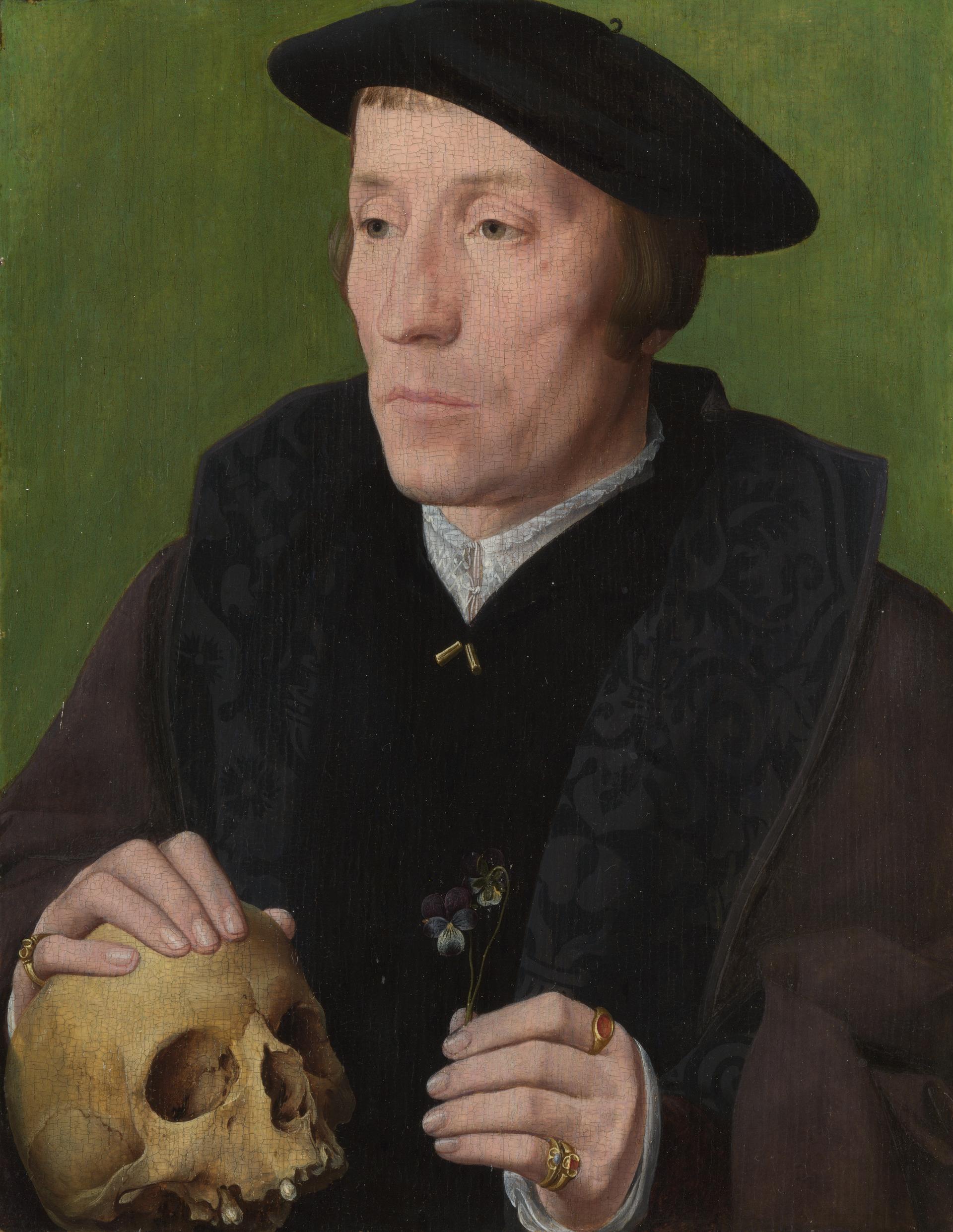
- Artist: Jan van Scorel
- Date: about 1535
- Medium: oil on wood
- Museum: The National Gallery
- Collection record: The National Gallery website
Listen to the free audio guide
In the museum now? Point your phone at the next artwork and hear its guide.
About this artwork
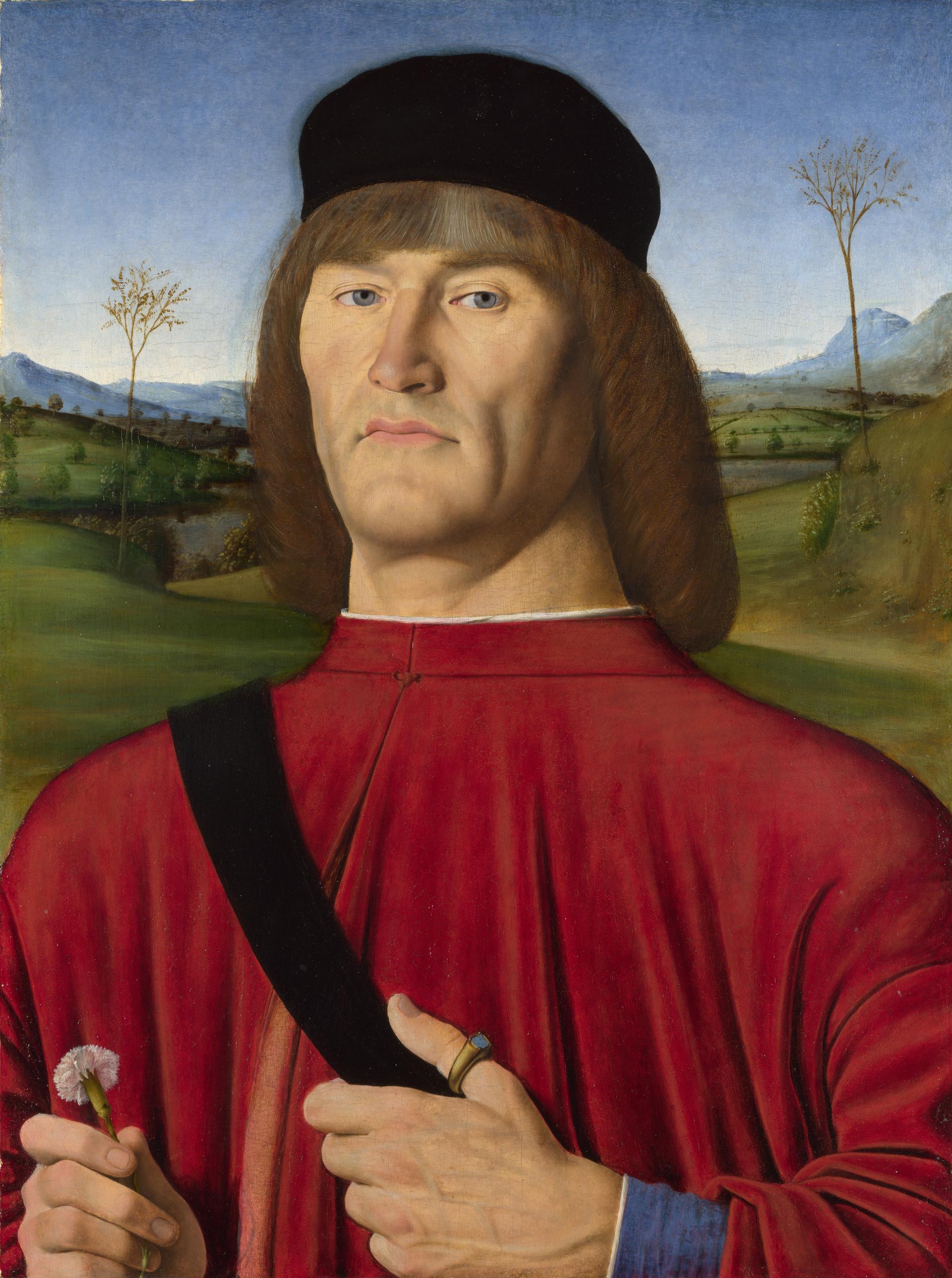
This is "A Man with Pansies and a Skull" painted by Jan van Scorel. He's depicted here as a sombre figure, wearing rich but dark clothing - a black hat, doublet, and purple coat lined with grey damask. His shirt is finely woven, with gold-tipped laces at his neck, and he wears four gold rings.
He rests his hand on a damaged skull, which has lost most of its teeth and lower jaw. In Renaissance art, skulls symbolized death. The pansies in the painting have a special significance - their French name means 'thought'. This is likely a visual pun, meant to convey contemplation of mortality.
The artist's style is similar to Jan van Scorel's, with elongated faces and enlarged features. However, infrared reflectography shows no underdrawing in this painting, suggesting it may be the work of a follower rather than Scorel himself.
This oil-on-wood panel was painted around 1535, using new sources for pigments at that time. The artist exploited the slow-drying qualities of oil paint to create smooth transitions between tones. His skills are evident in the detailed skull and surrounding textures.
See it in person
A Man with Pansies and a Skull hangs in The National Gallery on Trafalgar Square, London — free to enter. Point your phone at any artwork there and audioguide.london plays a free audio guide in six languages — no app download needed.